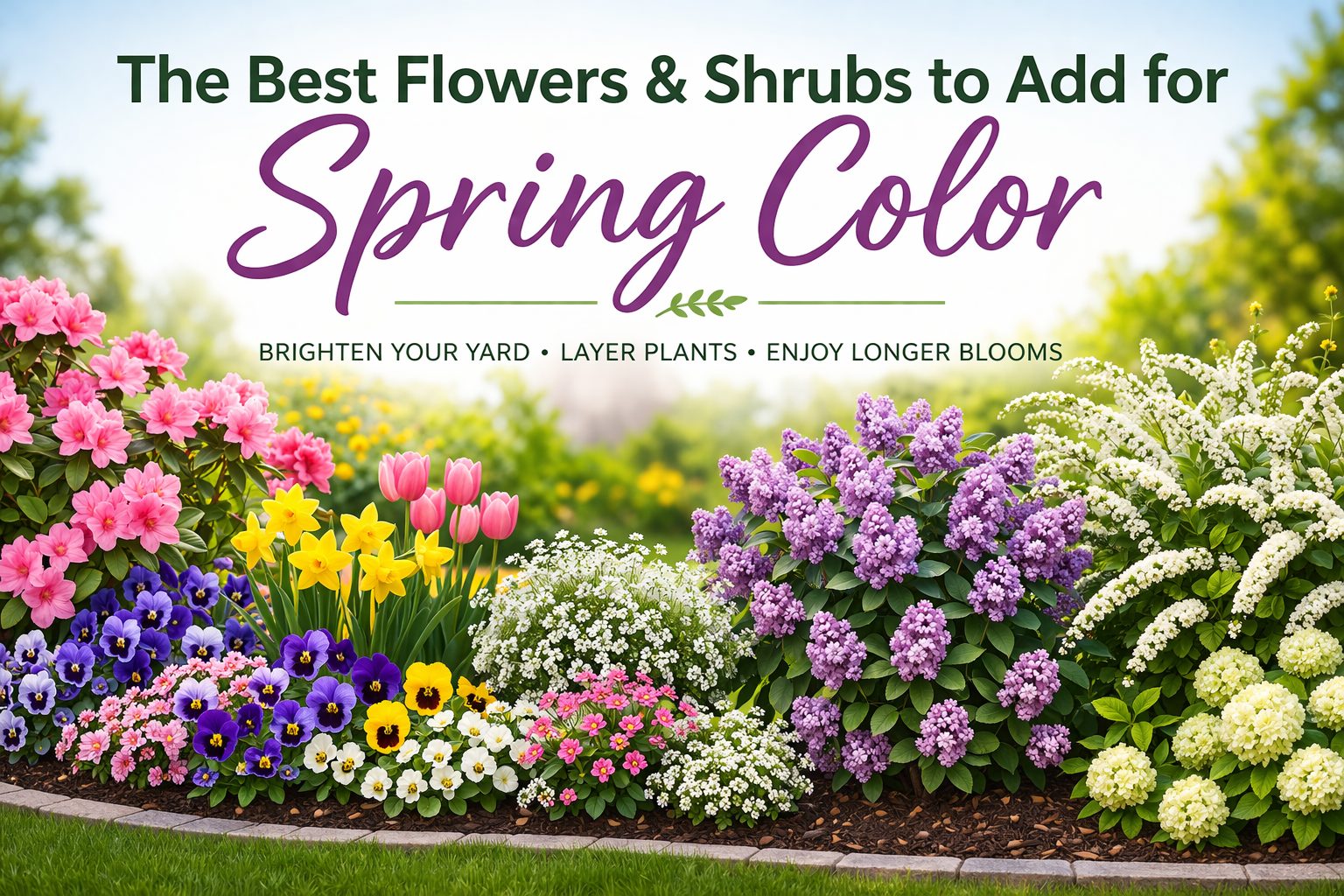
Spring color can change the entire feel of a yard. After winter, even a small layer of bloom makes the landscape look fresher, brighter, and more finished. But the best spring planting plans do not rely on one type of plant. The most successful gardens usually combine low flowers for quick impact and flowering shrubs for structure, height, and longer visual interest.
That is what makes spring planting so different from simply buying a few pretty flowers at the garden center. A bed may look colorful for a week, but without the right mix of bloom timing, sunlight, spacing, and shrub support, it can start to feel flat very quickly. A better approach is to layer early flowers, dependable fillers, and shrubs that hold the design together even after the first flush of blooms fades.
Why flowers and shrubs work better together
Flowers give you instant color close to the ground. Shrubs create the backbone behind that color. When both are used together, the yard feels fuller and more intentional because the eye moves through different heights instead of landing on one flat plane. That is especially important in spring, when many gardens need quick recovery after winter dormancy.
Shrubs also help extend the overall display. Some flowers bloom early and fade fast, while shrubs can carry the garden through mid to late spring and sometimes beyond. For example, flowering quince blooms very early, azaleas take over in mid-spring, and shrubs like hydrangea can carry the handoff into late spring and summer.
What to check before you plant
Before choosing flowers and shrubs, start with three basics: sunlight, drainage, and bloom timing. Clemson notes that most annuals need at least four to six hours of sun to flower well, and it also recommends avoiding areas where water stands after rain. For shadier spots, shade-tolerant plants such as impatiens and begonias are better choices than trying to force sun-loving flowers to perform where they will struggle.
It also helps to think about when you want the color. Some spring flowers are planted early because they tolerate cool conditions, while classic spring bulbs such as tulips, daffodils, and hyacinths are usually planted in fall so they can bloom the following spring. If you only plan in spring, you may still get beautiful results, but you may miss some of the most iconic early-season color.
Best flowers to add for spring color
Pansies
Pansies are one of the easiest choices for early spring color. They are well known for handling chilly conditions better than many other flowering annuals, which makes them a reliable option for borders, planters, porch pots, and front beds that need quick seasonal color. They also come in a wide range of shades, so they are easy to match with shrubs or hardscape colors.
Snapdragons
Snapdragons are useful because they add height without needing a shrub or tall perennial. Their upright flower spikes help spring beds look more layered and less flat. They work especially well behind lower flowers like pansies or alyssum, where they can add structure as well as color. Missouri Extension also classifies snapdragons among hardy annuals that tolerate cool temperatures, which makes them a strong early-season pick.
Sweet alyssum and dianthus
Sweet alyssum and dianthus are excellent for softening edges. Alyssum spreads gently and works well along paths, containers, and bed fronts, while dianthus adds stronger flower form and a classic spring-garden look. South Dakota State includes both among useful cool-season annuals, making them ideal for adding light, low color around larger plants and shrubs.
Petunias
Petunias are one of the most versatile flowering choices because they work in beds, hanging baskets, and window boxes. Missouri Extension notes that petunias can tolerate cool temperatures and even a moderate frost, which lets them go in earlier than many warm-season flowers. It also notes that newer petunia varieties have better vigor and heat tolerance than older types, so they can carry color well beyond early spring.
Impatiens for shadier spots
If part of the yard gets filtered light or afternoon shade, impatiens are still one of the best ways to bring in spring color. Clemson recommends shade-tolerant annuals such as impatiens for places that receive less sun, which makes them especially useful near porches, under trees with filtered light, or in side-yard beds that do not get a full day of sun.
Classic spring bulbs worth planning for
If you want that traditional spring-garden look, bulbs still matter. Illinois Extension notes that hardy spring-flowering bulbs are planted in fall, and that this is the prime time to get them established before winter. That means they are not the quick fix for this week’s planting project, but they are one of the smartest additions if you want stronger spring color next year.
Bulbs also work best when treated as part of a bigger plan rather than the whole plan. Planting them in groups creates a stronger spring statement, and mixing them with perennials or shrubs helps hide fading foliage after bloom. That makes them more useful as one layer in the design instead of the only source of color.
Best shrubs to add for spring color
Flowering quince
Flowering quince is one of the earliest shrubs to make an impact. NC State describes it as one of the first shrubs to bloom in late winter to early spring, with flowers that often appear before the leaves. That early timing makes it especially valuable if you want the yard to wake up faster and not wait until mid-spring for interest.
Azaleas
Azaleas remain one of the strongest shrubs for spring color because they can create a broad wash of bloom rather than just a few isolated flowers. NC State notes that azaleas bloom in spring and come in pink, red, orange, yellow, white, purple, and lavender. They are especially effective in part shade, which makes them a great fit for front foundation beds, woodland edges, and softer garden settings.
Lilacs
Lilacs are a classic spring shrub when fragrance matters as much as color. NC State’s plant listings show just how wide the range can be, from white and pale pink selections to deep purple cultivars. In the right location with good drainage and enough sun, lilacs can become one of the strongest seasonal focal points in the yard.
Bridal wreath spirea
Bridal wreath spirea is a strong choice if you want something more graceful and flowing than a dense, rounded shrub. NC State describes it as an early spring bloomer with double white flowers appearing in profusion along bare branches. That habit gives it a softer, cascading effect that works beautifully along fences, in mixed borders, or near the corners of a foundation bed.
Doublefile viburnum
Doublefile viburnum is a great shrub for gardeners who want spring bloom with a cleaner, more architectural form. NC State notes that its flowers appear along horizontal branches in late spring, giving it a layered look that stands out even when it is not in bloom. It is especially useful if you want white spring flowers but prefer something more structured than spirea.
Hydrangea for the late-spring transition
Hydrangea is useful because it helps extend color beyond the earliest spring window. NC State notes that smooth hydrangea blooms from May into July, and panicle hydrangea is more tolerant of full sun than many other hydrangeas. In design terms, hydrangea works less like an opener and more like a strong follow-up plant that keeps the garden from losing momentum after early spring flowers fade.
A simple planting formula that works
An easy way to build spring color is to use three layers. Start with flowers that give quick, low color, such as pansies, alyssum, dianthus, or petunias. Then add a flowering shrub behind them, such as azalea, spirea, or viburnum, to give the bed shape and height. If you plan ahead in fall, include bulbs as the earliest layer so the display starts even sooner next season.
This kind of layered planting works better than filling the whole bed with one flower type. It spreads the bloom season, gives the eye more to move through, and keeps the garden from looking empty once one group finishes flowering. It also makes maintenance decisions easier because the bed already has structure built into it.
How iScape can help you plan a spring garden
One of the hardest parts of spring planting is figuring out which flowers and shrubs will actually look good together before you buy them. iScape is built to solve that problem visually. On its official site, iScape says users can visualize landscape projects from a mobile device, start from AR or an uploaded yard photo, and work with thousands of plants, hardscapes, and products. Its pricing page also lists features such as proposal tools and image uploads, while its FAQ page says the app is free to download and available to trial on a limited basis.
For spring planting, that means you can test where shrubs should go, compare flower colors, and see whether a bed feels too crowded or too sparse before spending time and money on installation. iScape also says it has nearly 4 million downloads, which adds confidence for homeowners and pros looking for a proven landscape design app rather than a random planning tool.
Download iScape on the App Store or Google Play Store today and start designing today. Try a free trial today at iScape!
Final thoughts
The best flowers and shrubs for spring color are the ones that work together, not just the ones that look good by themselves. Flowers bring quick brightness, shrubs create structure, and thoughtful layering keeps the yard looking fresh long after the first blooms arrive. When you build the planting plan around bloom timing, sunlight, and scale, spring color feels more polished and lasts much longer.
Want to see how flowers and shrubs will look in your yard before you start planting? Use iScape to test spring color combinations, compare layouts, and build a garden plan that feels balanced from the start. Explore ideas visually, avoid costly guesswork, and plan your spring landscape with more confidence.
Download iScape on the App Store or Google Play Store today and start designing today!
Try a free trial today at iScape!