A professional-looking yard is not only about expensive plants, premium materials, or a large outdoor space. In most cases, the layout makes the biggest difference. When a yard has clear zones, smooth movement, balanced planting, clean edges, and a strong focal point, it instantly feels more polished and well-planned.
Many homeowners start by buying plants, furniture, lights, or outdoor décor, but the yard still feels unfinished because the overall layout is missing. A good landscape layout helps every part of the yard work together. It decides where people walk, where they sit, what they notice first, and how the space feels from the house, street, patio, or entryway.
The good news is that you do not need to redesign everything at once. A few smart layout changes can make your yard look cleaner, more organized, and more professionally designed.
1. Start With The Purpose Of Your Yard
Before changing anything, think about how you want to use the yard. A beautiful yard should not only look good, but it should also support your daily lifestyle. Your yard may need space for relaxing, outdoor dining, gardening, pets, kids, entertaining guests, or simply improving curb appeal. Once you know the main purpose, it becomes easier to decide where each feature should go.
For example, a seating area may work better near the patio or in a shaded corner. A garden bed may look better along a fence, walkway, or entry path. A lawn area may need to stay open so the space does not feel crowded. This step helps you avoid random placement. Instead of adding plants and furniture wherever there is empty space, you begin designing with a clear plan.
2. Divide The Yard Into Clear Zones
A professional yard usually has different areas with different purposes. These areas are called zones. You do not need walls or large structures to create them. Simple design choices can separate each section in a natural way. For example, a backyard can include:
- A dining zone near the house
- A lounge area under shade
- A lawn space in the center
- Garden beds along the edges
- A walkway that connects everything
A front yard can include:
- A clean entry path
- Foundation plants near the house
- A small focal point near the walkway
- Open lawn or groundcover for balance
Defined zones make the yard easier to understand visually. They also make the space more useful because every section has a clear role. You can create zones with mulch, pavers, gravel, edging, planters, outdoor rugs, lighting, or plant beds. The goal is to make the yard feel organized without making it look crowded.
3. Create One Strong Focal Point
Every professional landscape usually has at least one focal point. This is the feature that naturally draws attention and gives the yard a sense of direction.
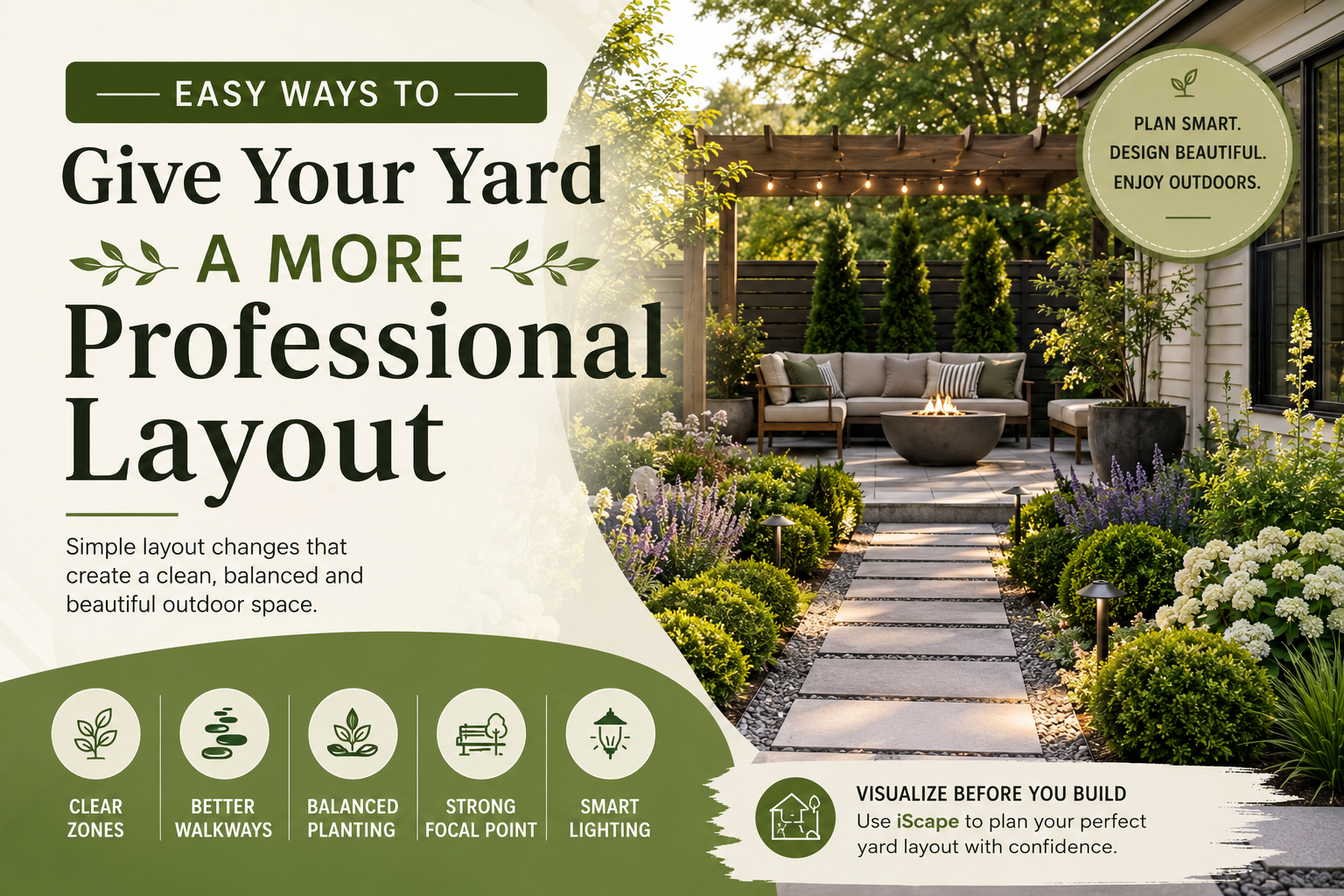
A focal point can be simple. It may be a small tree, a garden bench, a water feature, a fire pit, a large planter, a pergola, a clean front entry, or a well-designed flower bed. The feature does not need to be expensive. What matters most is where it is placed and how the rest of the yard supports it.
In a front yard, the front door or entry walkway is often the natural focal point. In a backyard, it may be the patio, seating area, outdoor kitchen, fire pit, or garden feature. Once you choose the focal point, arrange paths, plants, furniture, and lighting around it. This helps the yard feel connected instead of looking like separate pieces placed without a plan.
4. Improve The Flow With Walkways
Walkways play a major role in yard layout because they guide people through the space. A poorly placed walkway can make the yard feel awkward, while a well-planned path makes the design feel natural and professional.
Start by noticing how people already move through the yard. If family members often cut across the lawn to reach the driveway, gate, patio, or garden area, that may be the best place for a path. A good walkway should:
- Have a clear starting point and ending point
- Connect important areas of the yard
- Be wide enough for comfortable walking
- Feel natural to use
- Stay clear from overgrown plants
You can make a walkway look more finished with border plants, low edging, gravel, stepping stones, pavers, or path lighting. These details help the path feel like part of the design instead of an afterthought.
5. Use Clean Lines For A More Planned Look
Professional yards often look better because the lines are clean and consistent. These lines may come from garden bed edges, patios, fences, walkways, lawn borders, retaining walls, or rows of plants.
Straight lines usually create a modern and structured look. They work well near patios, driveways, side yards, and homes with clean architectural shapes. Curved lines feel softer and more natural. They are often used in garden beds, informal landscapes, and yards where the goal is a relaxed flow.
The main thing to avoid is mixing too many random shapes. If one garden bed has a sharp angle, another has a random curve, and the walkway does not connect visually with either, the yard can feel messy. Choose one main layout style and keep it consistent. This makes the yard look more intentional and easier to maintain.
6. Balance Open Space And Planted Areas
A common mistake is filling every empty space with plants, furniture, pots, or décor. While these items can add beauty, too many of them can make the yard feel crowded. Professional layouts often leave enough open space so the design can breathe. A clean lawn, simple patio, gravel sitting area, or clear walkway gives the eye a place to rest. This makes the planted areas stand out more.
At the same time, too much open space can make the yard feel empty. The key is balance. If the center of the yard is open, the edges can be softened with shrubs, flowers, ornamental grasses, or trees. If the patio feels too hard, nearby planting can make it feel warmer and more inviting. A strong layout usually has a balanced mix of lawn, planting, hardscape, and open space.
7. Group Plants Instead Of Spreading Them Everywhere
Scattered planting can make a yard look unfinished. One plant near the fence, one near the patio, and another in the middle of the lawn can create a disconnected look. A more professional approach is to group plants in planned sections. Plant groupings create more visual impact and make the yard feel fuller. A simple planting layout usually follows this pattern:
- Tall plants or shrubs in the back
- Medium-height plants in the middle
- Low plants, flowers, or groundcovers in the front
This creates depth and helps garden beds look more layered. You can also repeat the same plant in different parts of the yard to create rhythm and consistency. For example, using the same ornamental grass near the walkway, patio, and garden edge can help connect the entire layout. Repetition makes the design feel more planned.
8. Add Borders And Edging For A Finished Look
Clean edges can completely change the look of a yard. Even simple planting beds look more professional when the borders are neat and clearly defined. You can use edging around:
- Flower beds
- Walkways
- Trees
- Patios
- Driveways
- Gravel areas
- Lawn sections
Common edging materials include stone, brick, metal, concrete, wood, and natural trench edging. The best choice depends on the style of your home and yard. A modern yard may look better with metal edging or clean concrete borders. A traditional yard may feel more natural with brick or stone. A rustic garden may work well with timber or natural edges. Edging also makes maintenance easier because it keeps mulch, soil, gravel, and grass in their proper places.
9. Make The Yard Match The Style Of Your Home
A yard looks more professional when it feels connected to the house. The landscape should support the home’s style instead of feeling like a separate design. Look at your home’s exterior materials, colors, roofline, windows, front entry, and overall shape. These details can guide your layout choices.
For example, a brick home may pair well with brick edging or warm-toned stone. A modern home may look better with large pavers, gravel, simple greenery, and straight planting lines. A cottage-style home may work well with curved beds, layered flowers, and softer paths. The goal is not to match everything perfectly. The goal is to create harmony between the home and the yard.
10. Place Furniture Where It Supports The Layout
Outdoor furniture should fit the layout, not block it. One common mistake is buying furniture first and then trying to force it into the yard. Before placing furniture, think about movement and comfort. People should be able to walk easily from the house to the patio, from the patio to the yard, and around seating or dining areas.
Furniture should face a view, a focal point, or a conversation area. It should not feel random or oversized for the space. In a small yard, a compact bistro set, two chairs, or a narrow bench may work better than a large sectional. In a larger yard, you can create separate areas for dining, lounging, and gathering. When furniture is placed correctly, it helps define outdoor zones and makes the yard more inviting.
11. Use Lighting To Highlight The Layout
Outdoor lighting does more than make the yard usable at night. It also helps show the structure of the design.
Use lighting to highlight important areas such as walkways, steps, trees, garden beds, patios, seating areas, and entryways. Path lights can guide movement. Uplights can highlight trees or architectural features. String lights can define a seating area. Wall lights can make an entryway feel more polished.
The key is to place lights with purpose. Random lighting can make the yard feel uneven, but planned lighting helps the best parts of the layout stand out. Good lighting can make even a simple yard feel more finished and high-end.
12. Keep The Overall Design Simple
A professional yard does not need too many features. In fact, simple layouts often look better because they are easier to understand and maintain. Try to repeat a few key elements throughout the yard. This could be the same edging material, the same plant type, the same paver style, or the same color family. Repetition helps connect different areas and gives the design a cleaner look.
Avoid using too many plant varieties, furniture styles, décor pieces, and materials at the same time. Too many competing elements can make the yard feel busy. A clean, balanced, and practical design usually looks better over time than a yard filled with too many features.
13. Plan The Layout Before Buying Materials
Many yard layout problems happen because changes are made one at a time without a full plan. A homeowner may add a few plants, then a seating area, then a walkway, then lighting. Each item may look good alone, but the full yard may still feel disconnected.
Before spending money, create a basic layout plan. Decide where the main zones, walkways, planting beds, lawn areas, hardscape features, and focal points should go. Planning first helps you avoid costly mistakes. You can check whether a patio is too large, a path is in the wrong place, or a planting bed blocks movement. It is much easier to adjust the layout before buying plants, pavers, furniture, or materials.
How iScape Helps You Plan A More Professional Yard Layout
iScape makes the planning process easier by helping you visualize your yard before making real changes. Instead of guessing where a walkway, patio, garden bed, tree, or seating area should go, you can test different layout ideas digitally. For homeowners, iScape can help compare design options, plan outdoor zones, test plant placement, and see how different hardscape features may look together. This reduces guesswork and helps you make better decisions before spending money.
For landscape professionals, iScape can also help create clearer concepts for clients. A visual layout makes it easier to explain the design direction, show how each area will function, and help clients understand the final vision before approving the project. By using iScape during the planning stage, both homeowners and professionals can create yard layouts that feel more organized, balanced, and ready for real-world execution.
Final Thoughts
Giving your yard a more professional layout does not always require a full renovation. It starts with better planning, clear zones, smart placement, and a stronger sense of flow. Focus on how the yard should function first. Then create a focal point, improve walkways, group plants, clean up edges, balance open space, and choose materials that match your home.
With thoughtful planning and tools like iScape, you can turn an ordinary yard into a more beautiful, practical, and professionally designed outdoor space before the real work begins. Download iScape on the App Store or Google Play Store today and start designing. Try a free trial today at iScape!
FAQs
1. How Do I Make My Yard Look Professionally Landscaped?
Start with a clear layout. Define walkways, clean up edges, group plants, add one focal point, and keep the design balanced.
2. What Is The First Step In Planning A Yard Layout?
Decide how you want to use the yard. Plan areas for seating, walking, gardening, lawn, shade, or outdoor dining before adding plants or furniture.
3. How Can I Make A Small Yard Look Better?
Keep it simple. Use compact furniture, clear paths, fewer materials, vertical plants, and neat borders to make the space feel open and organized.
4. What Makes A Yard Layout Look Balanced?
A balanced yard has the right mix of plants, open space, walkways, and hardscape. No single area should feel too empty or too crowded.
5. Should I Use Straight Or Curved Lines In My Yard?
Use straight lines for a clean, modern look. Use curved lines for a softer, natural feel. Keep the style consistent throughout the yard.
6. How Do I Create Zones In My Backyard?
Separate areas by purpose. You can create zones for dining, relaxing, gardening, and open lawn using pavers, mulch, gravel, edging, plants, or lighting.
7. How Can I Improve My Yard On A Budget?
Start with simple changes like fresh mulch, clean edging, better plant grouping, a clear walkway, trimmed plants, and improved furniture placement.
8. Can iScape Help Me Plan My Yard Layout?
Yes. iScape helps you visualize walkways, plants, patios, garden beds, and outdoor zones before making real changes.