A front yard can look empty even when it has grass, a few shrubs, and some planting beds. It can also look uneven even when nothing is badly damaged. In most cases, the real problem is not one single plant or bare patch. It is the overall layout. When the yard lacks structure, balance, and a clear focal point, the whole space can feel unfinished from the street. Good landscape design is meant to be both attractive and functional, and that starts with how the space is organized.
The good news is that you do not need to overload the yard with random plants to fix it. A better result usually comes from improving the shape of the beds, adding more visual layers, repairing rough lawn areas, and making the entry feel more intentional. Once those pieces come together, the front yard starts to feel fuller, cleaner, and more connected to the home.
Start with the main reason it looks empty
A front yard often looks empty because there is too much open lawn and not enough structure around it. Sometimes the beds are too narrow. Sometimes the shrubs are too small for the scale of the house. In other cases, everything sits low to the ground, so the yard feels flat instead of layered. NC State notes that design concepts like scale, balance, unity, rhythm, and accent are what help a landscape feel complete rather than scattered.
Another common issue is that the yard has no real focal point. Missouri Extension says the main focal point in a front yard should usually be the entry to the house. If the eye does not naturally move toward the front door, the yard can feel weak and disconnected, even when the plants are healthy.
Fix the layout before adding more plants
A lot of homeowners try to solve an empty-looking yard by buying more flowers or shrubs right away. That usually creates clutter, not balance. A better first step is to look at the overall layout. Study the lawn shape, the walkway, the bed lines, and how the landscape frames the house. Good design begins with the structure of the space, not just the plant list.
If the foundation beds are very thin, the house may look like it is sitting in too much empty lawn. Clemson’s foundation planting guidance explains that front plantings should help complement the house, blend it into the site, and create a more welcoming entrance. That means the beds should feel intentional, not like a narrow strip of plants placed against the wall as an afterthought.
Make the front entry the visual anchor
One of the easiest ways to improve a front yard is to make the entry area stronger. The front door should feel like the natural center of attention. That does not mean the design has to be formal or symmetrical. It simply means the yard should guide the eye toward the entrance instead of letting attention drift across random lawn and scattered planting. Missouri Extension recommends using carefully placed accents to reinforce the importance of the front door.
This can be done with a better-shaped entry bed, a pair of planters, layered shrubs near the walk, or one simple specimen plant that helps frame the approach. Even a modest change in this area can make the whole front yard look more finished because it gives the space a stronger visual purpose.
Add layers so the yard stops looking flat
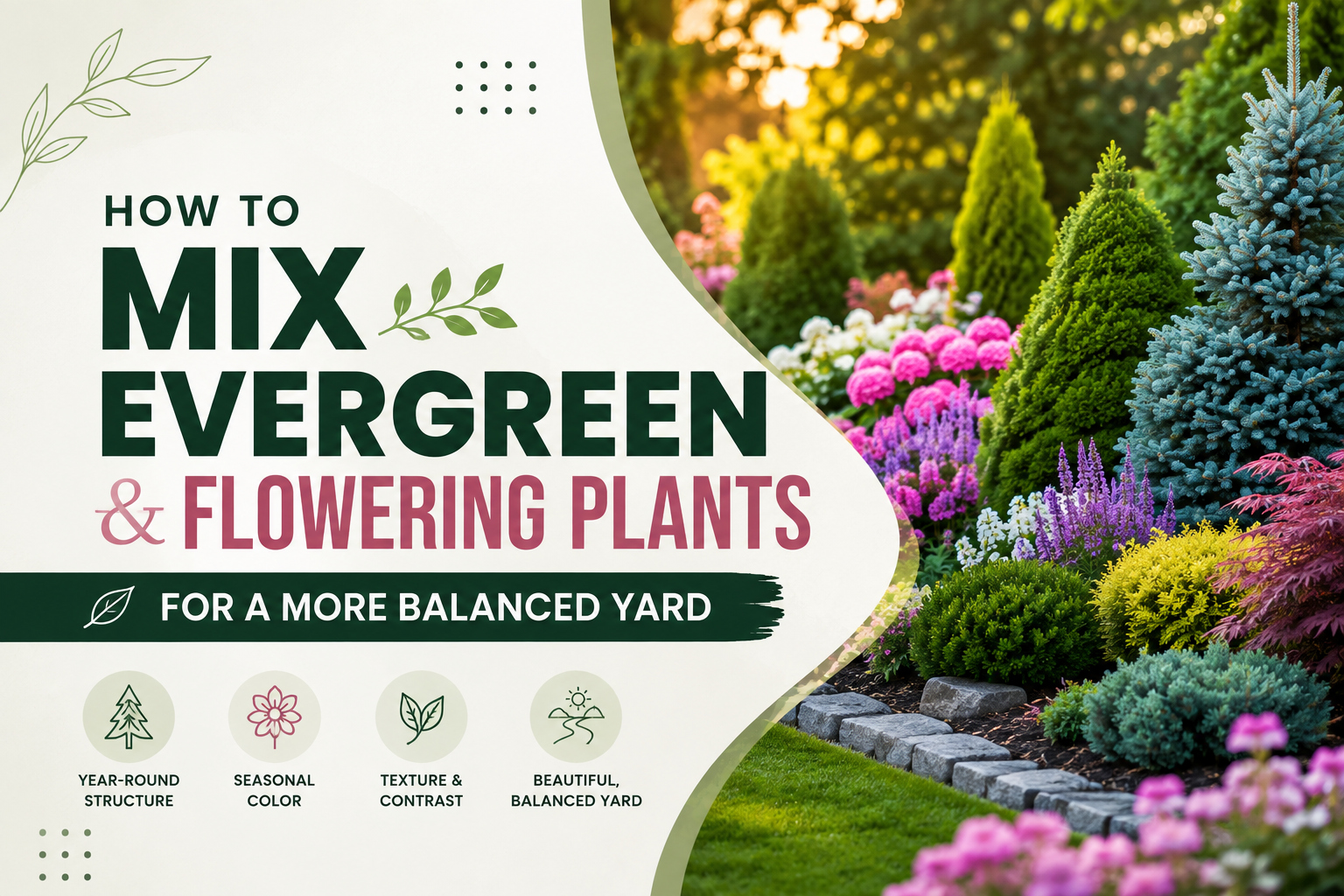
A flat yard often looks empty because everything is close to the same height. Layering helps solve that. In simple terms, you want some taller elements, some mid-level plants, and some lower plants to create depth. This makes the landscape feel fuller without making it look crowded. Landscape design guidance consistently supports using height, repetition, and visual rhythm to make a yard feel more connected.
This does not mean filling every inch. It means placing plants in a way that builds a clearer visual flow from the house outward. For example, larger shrubs or an ornamental tree can help anchor corners, medium shrubs can fill the main body of the beds, and lower plants can soften the edges near the lawn or walkway. When heights change more naturally, the yard feels less bare and more balanced.
Repair rough or uneven lawn areas
Sometimes the front yard looks uneven because the lawn surface is uneven. Low spots, bumps, patchy turf, and worn areas can make the entire landscape look untidy. University of Maryland Extension says uneven ground should be leveled out and repaired with proper soil preparation when renovating damaged lawn areas. Iowa State also notes that rough, bumpy lawns are not only unattractive but also difficult to mow and manage.
If your yard has dips, scalped areas, or thin spots that always look worse than the rest of the lawn, fixing those sections can make a big visual difference. Even if you do not redesign the entire front yard, a smoother, healthier lawn instantly makes the space look more even and cared for.
Use fewer plant types, repeated better
An uneven-looking yard is often a sign that too many unrelated things were added over time. One shrub here, a different flowering plant there, and a few random accents can make the yard feel choppy. Repetition is one of the basic organizing principles of landscape design because it helps create unity. NC State specifically identifies repetition and simplicity as key ways to make a design feel more harmonious.
A stronger front yard usually comes from choosing a smaller group of plants and repeating them in a thoughtful way. That could mean using the same evergreen shrub in more than one part of the foundation bed or repeating the same plant form on both sides of the entry. When the yard repeats shapes, textures, or colors with intention, it starts to look more polished.
How the iScape app can help
It is hard to judge bed size, spacing, and balance just by standing in the yard and imagining changes in your head. That is where the iScape app can help. On its official site, iScape says users can design directly on an image of their yard or job site using 2D or 3D augmented reality tools. The company also says the app has a 4.6 user rating and nearly 4 million downloads.
For front yard projects, that can be especially useful because you can test bed shapes, edging lines, plant groupings, and walkway ideas before spending money. iScape’s own front-yard planning content says homeowners can start with a photo, AR view, or even Google Street View, then try different layouts to see what looks balanced and intentional. It also highlights that you can preview plants and materials before ordering anything.
In simple terms, iScape helps you see whether the front yard still feels too empty, whether one side looks heavier than the other, or whether the entry needs more structure before you start the real work. That makes it easier to fix the layout with more confidence.
Download iScape on the App Store or Google Play Store today and start designing today. Try a free trial today at iScape!
Final thoughts
A front yard that looks empty and uneven usually does not need more random plants. It needs better structure. When you strengthen the bed lines, make the entry more noticeable, add layers, repeat a few key elements, and repair rough lawn areas, the space starts to feel more balanced and complete. The goal is not to fill every open spot. The goal is to make the whole yard feel intentional from the street.
If you want to plan those changes more clearly before buying materials, iScape can help you visualize ideas in your real front yard and compare options before you commit.
See your front yard before you redesign it
Planning is easier when you can see the changes before the work begins. Use the iScape app to test bed shapes, layout ideas, plant placement, and curb appeal upgrades on your real yard.
Download iScape on the App Store or Google Play Store today and start designing today!
Try a free trial today at iScape!