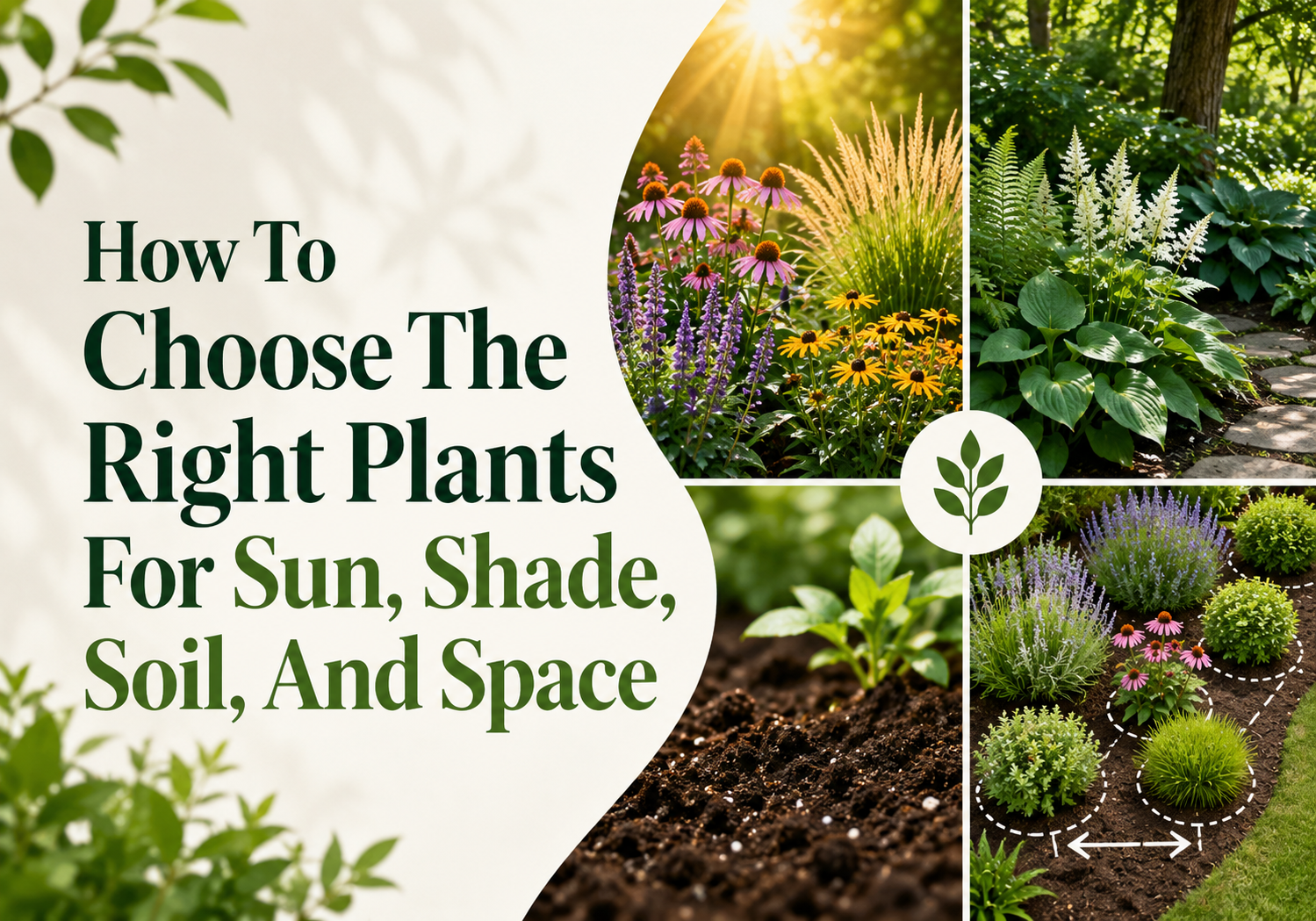
Choosing the right plants is one of the most important steps in creating a healthy, low-maintenance landscape. Many homeowners choose plants based on color, flowers, or how they look at the garden center. That is understandable, but it often leads to problems later. A plant may look perfect in the pot, but if it is placed in the wrong light, wrong soil, or too-small space, it can struggle for years.
The better approach is simple: choose the plant after you understand the spot. This is often called “right plant, right place.” It means the plant should match the sunlight, soil, water, climate, and space available in your yard. When these conditions are right, plants grow stronger, need less care, and look better through the seasons.
The USDA Plant Hardiness Zone Map is a useful starting point because it helps gardeners understand which perennial plants are most likely to survive winter temperatures in their area. The map is based on average annual extreme minimum winter temperatures, shown in 10-degree zones and 5-degree half-zones.
Start With Your Climate Zone
Before choosing any plant, check your local plant hardiness zone. This matters most for trees, shrubs, vines, and perennials because these plants are expected to return year after year.
For example, a plant that grows well in a warm Southern climate may not survive a cold Northern winter. On the other hand, some cool-season plants may struggle in places with intense heat and long summers.
Your hardiness zone helps you answer one basic question:
- Can this plant survive my local winter?
- Once the answer is yes, you can move to the next step: sunlight.
Understand How Much Sun The Area Gets
Sunlight is one of the biggest reasons plants either thrive or fail. A plant that needs full sun will often become weak, thin, and less colorful in shade. A shade-loving plant placed in harsh afternoon sun may burn, wilt, or dry out too fast.
The easiest way to understand your yard is to watch the area during the day. Check it in the morning, midday, and afternoon. Do this for a few days if possible, because trees, fences, rooflines, and neighboring buildings can change the light pattern.
In general, sunlight categories are:
- Full Sun: At least 6 to 8 hours of direct sunlight daily.
- Part Sun: Around 4 to 6 hours of direct sunlight, often during the cooler parts of the day.
- Part Shade: Around 2 to 4 hours of direct sunlight, usually with protection from harsh afternoon sun.
- Full Shade: Less than 2 hours of direct sunlight, often with filtered or indirect light.
Choose Plants For Full Sun Areas
Full sun areas are usually open spaces with little shade. These spots are often good for flowering perennials, ornamental grasses, many herbs, vegetables, and sun-loving shrubs.
Good choices for sunny areas often include:
Coneflower, salvia, lavender, black-eyed Susan, daylily, yarrow, ornamental grasses, rosemary, thyme, tomatoes, peppers, and many flowering annuals.
Full sun plants usually produce better blooms when they get enough light. They also tend to have stronger stems and fuller growth. But full sun does not mean “never water.” Young plants still need steady moisture while their roots establish. In hot climates, even sun-loving plants may need extra care during long dry periods.
Choose Plants For Shade Areas
Shade gardens need a different mindset. The goal is not always big flowers. In many shaded spaces, texture, leaf color, shape, and layering become more important.
Good choices for shady areas often include:
Hosta, fern, astilbe, heuchera, hellebore, lungwort, woodland phlox, caladium, impatiens, and shade-tolerant groundcovers.
Shade can also be different from one yard to another. A spot under a tall tree with filtered light is not the same as a dark corner between two buildings. Some plants can handle light shade but not deep shade. Others can grow in deep shade but may bloom less.
A helpful rule is to use lighter-colored foliage, varied leaf shapes, and layered plant heights in shade areas. This keeps the space from looking flat or dull.
Check The Soil Before You Plant
Soil is not just dirt. It controls how roots breathe, how water drains, and how nutrients reach the plant. Two yards in the same neighborhood can have very different soil conditions. Before choosing plants, look at these soil factors:
- Drainage: Does water drain quickly, or does it sit after rain?
- Texture: Is the soil sandy, clay-heavy, or loamy?
- pH: Is the soil acidic, neutral, or alkaline?
- Organic Matter: Does the soil look rich and crumbly, or dry and lifeless?
- Compaction: Is the soil hard and difficult to dig?
A soil test is the best way to understand what your soil needs. The University of Minnesota Extension notes that soil testing can show soil texture, pH, organic matter, and nutrient levels, which helps gardeners make better fertilizer and amendment decisions.
Match Plants To Soil Type
Once you know your soil, choose plants that can handle those conditions.
For clay soil, choose plants that tolerate heavier, slower-draining ground. Many native plants and sturdy perennials can handle clay once established, but roots may suffer if water sits too long.
For sandy soil, choose plants that tolerate fast drainage and lower moisture. Lavender, yarrow, sedum, ornamental grasses, and many drought-tolerant plants often do better in sandy or well-drained areas.
For wet soil, choose plants that can handle moisture. Do not force dry-loving plants into soggy ground. Instead, consider moisture-tolerant plants, rain garden plants, or drainage improvements.
For acidic soil, plants like azaleas, camellias, blueberries, and certain hydrangeas may perform well, depending on your climate.
For alkaline soil, choose plants that tolerate higher pH rather than constantly trying to change the soil.
The main point is simple: improving soil is good, but fighting your soil forever is expensive and frustrating. It is often smarter to choose plants that naturally fit the soil you already have.
Think About Mature Plant Size
One of the most common landscaping mistakes is planting too closely. Small nursery plants can be misleading. A shrub that looks tiny today may become 5 feet wide. A tree that looks manageable now may one day shade your roof, block windows, or grow into power lines. Always check the mature height and width before planting. Ask these questions:
- Will this plant block a window when mature?
- Will it crowd the walkway?
- Will it touch the house?
- Will it outgrow the flower bed?
- Will it compete with nearby plants?
- Will roots or branches create problems later?
Good spacing helps air move between plants. It also reduces pruning work and helps prevent crowded, messy beds. Plants often look sparse at first when spaced correctly, but they fill in naturally over time.
Plan Plant Layers Properly
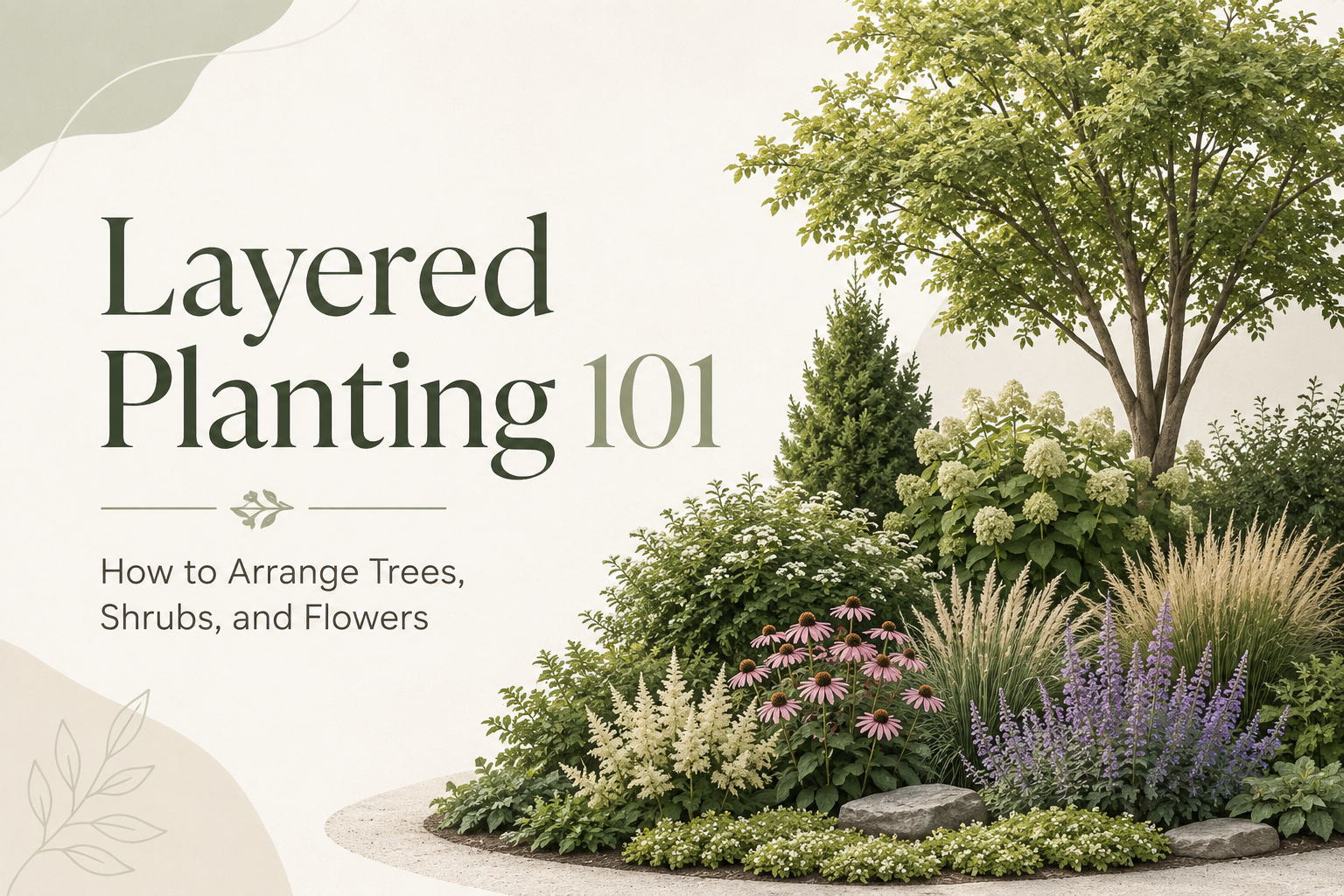
A strong landscape design usually has layers. This gives the yard depth and balance. A simple layout can include:
- Tall plants in the back or as focal points.
- Medium shrubs or perennials in the middle.
- Low-growing plants, groundcovers, or flowers near the front.
- Seasonal color in open pockets.
- Evergreens for year-round structure.
This approach works well for front yards, foundation beds, backyard borders, and garden edges. It also helps each plant get enough light and room.
Consider Water Needs
Water needs should match the area where you are planting. Do not place thirsty plants next to drought-tolerant plants unless you are ready for uneven care. One group will likely suffer. Group plants with similar water needs together. This is called hydrozoning. It makes watering easier and reduces waste. For example, plants near a downspout may need to tolerate extra moisture. Plants near a driveway, sidewalk, or hot wall may need to handle heat and dryness. A low area in the yard may need moisture-tolerant plants, while a raised bed may dry out faster.
Do Not Ignore Maintenance
Some plants need regular pruning, deadheading, dividing, spraying, or cleanup. Others need very little care once established. Before buying a plant, ask:
- How often does it need pruning?
- Does it spread aggressively?
- Does it drop fruit, seeds, or messy leaves?
- Is it prone to pests in my area?
- Will it need winter protection?
- Does it need frequent watering?
Low-maintenance does not mean no maintenance. It means the plant fits the site well enough that it does not need constant attention. Placing a plant in the wrong environment can make it weaker and more likely to face insect and disease problems, according to Illinois Extension guidance on garden pest management.
Choose Plants Based On Purpose
Every plant should have a job in the landscape. Some plants are chosen for beauty, but they can also serve practical roles. Plants can help with:
- Privacy
- Shade
- Curb appeal
- Pollinator support
- Erosion control
- Noise softening
- Seasonal color
- Foundation planting
- Pathway borders
- Outdoor room definition
For example, a narrow side yard may need upright plants that do not spread too wide. A front entry may need colorful, tidy plants that stay presentable. A backyard seating area may need soft screening plants that create privacy without making the space feel closed in. When every plant has a purpose, the landscape feels more planned and less random.
Think About Seasonal Interest
A plant may look beautiful for two weeks in spring and plain for the rest of the year. That does not make it a bad plant, but it should not be the only feature in the bed. Try to mix plants that offer interest in different seasons:
- Spring flowers
- Summer color
- Fall foliage
- Winter structure
- Evergreen texture
- Seed heads or bark interest
- Plants that attract birds or pollinators
This keeps the yard from looking empty after one bloom cycle ends.
Avoid Buying Plants Only Because They Look Good At The Store
Garden centers often display plants when they are at their best. They may be in bloom, recently watered, and arranged beautifully. But that does not mean they are right for your yard. Before buying, read the plant tag carefully. Look for:
- Sun requirement
- Water need
- Mature size
- Hardiness zone
- Soil preference
- Bloom time
- Growth habit
- Spacing recommendation
If the plant tag does not match your yard conditions, skip it. A healthy plant in the wrong place becomes a problem later.
How iScape Can Help You Choose Better Plants
Choosing plants is easier when you can see how they will look before you start digging. This is where the iScape app can help homeowners, DIY gardeners, and landscape professionals plan with more confidence.
iScape lets users visualize outdoor projects before spending real money and time. Its official site lists access to thousands of plants, hardscapes, and products, along with features such as 2D and 3D design on iOS, image uploads, and design tools depending on the plan. With iScape, you can:
- Preview plant placement before buying
- Test different garden bed layouts
- See how trees, shrubs, flowers, and hardscapes work together
- Compare multiple design ideas
- Plan spacing more clearly
- Avoid overcrowding
- Visualize changes around patios, walkways, fences, and front yards
- Share design ideas with family, clients, or contractors
For homeowners, this means fewer impulse purchases and fewer plants placed in the wrong area. For professionals, it helps explain design choices visually, especially when clients struggle to picture mature plant placement or layout balance. iScape also highlights its use for DIY homeowners and landscape professionals, and its site notes a 4.6 user rating with nearly 4 million downloads.
Quick Checklist Before Choosing Plants
Before buying plants, use this checklist:
- How much sunlight does the area get?
- Is it full sun, part sun, part shade, or full shade?
- Is the soil clay, sandy, loamy, dry, or wet?
- Does the area drain well after rain?
- What is the plant’s mature height and width?
- Will it fit near the house, walkway, fence, or patio?
- Does it match the water needs of nearby plants?
- How much maintenance will it require?
- Does it add color, privacy, texture, shade, or structure?
- Will it look good in more than one season?
- Can the layout be visualized before planting?
This simple checklist can help you avoid many common landscaping mistakes.
Final Thoughts
The right plant is not always the most colorful plant at the garden center. It is the plant that fits your sun, shade, soil, space, climate, and maintenance level. When plants are chosen this way, they grow stronger, look better, and need less correction later.
Before planting, study your yard first. Watch the sunlight. Check the soil. Measure the space. Think about mature size. Then use a visual planning tool like iScape to test your ideas before spending money on plants, mulch, edging, or hardscape materials. A beautiful landscape starts with smart plant choices. The more carefully you match each plant to its place, the easier your yard becomes to maintain and enjoy.