A patio should feel like it belongs in your yard, not like it was dropped into it. That is where many outdoor projects go wrong. People focus on the patio surface, furniture, or finish color first, but the real success of a patio comes from fit. A patio that fits your outdoor space better will look more natural, feel more comfortable, and work better for everyday life. The good news is that you do not need a huge yard or a luxury budget to make that happen. You just need a smarter plan.
This guide breaks down how to create a patio that suits your space, solves common layout mistakes, and feels connected to the rest of your yard. It also covers how a landscape design app or garden design app can help you make better decisions before you start spending money.
Why patio fit matters more than patio size
A bigger patio does not always mean a better patio. In fact, patios often look awkward when they are too large for the yard, too small for the furniture, or placed in a spot that does not match how the space is used. A well-planned patio should support movement, seating, views, privacy, and access to the house. When a patio fits properly, it usually does three things well:
- It matches the scale of the home and yard
- It supports the way you actually want to use the space
- It feels connected to the landscape around it
That is what gives a patio a polished and intentional look.
Start with how you want to use the patio
Before thinking about shape, material, or decor, decide what the patio is meant to do. This step sounds obvious, but it is often skipped. Many homeowners end up with a patio that looks nice in photos but does not work well in real life. Ask yourself:
- Will this be used for dining, relaxing, entertaining, or all three?
- Do you want space for a fire pit?
- Will kids or pets be moving through it often?
- Do you need room for a grill or outdoor kitchen setup?
- Is this a quiet morning coffee space or a social gathering space?
The answers affect everything from patio size to furniture layout. For example, a dining patio needs enough room for chairs to pull out comfortably. A lounge patio may work better with softer edges and more space between furniture pieces. A multi-use patio may need separate zones instead of one open rectangle.
Read the yard before you design the patio
A patio should respond to the yard you have, not the yard you wish you had. Take a careful look at the outdoor space before planning anything permanent. Notice:
- Where the sun hits in the morning and afternoon
- Which areas stay wet after rain
- Whether the yard slopes
- Where people naturally walk
- What views you want to highlight or block
- Which areas feel too exposed or too cramped
This tells you where a patio will feel comfortable and where it will struggle. For example, a sunny open area may be great for entertaining in spring but harsh in summer if there is no shade plan. A low corner of the yard may seem tucked away, but it may also collect water. A patio beside a beautiful garden bed may feel far better than one facing a fence or utility area.
Match the patio size to the yard
One of the easiest ways to make a patio look wrong is to choose the size without looking at the overall yard balance. A patio that takes over the backyard can make the whole space feel hard and crowded. A patio that is too small can feel like an afterthought and become frustrating to use. A better approach is to think of the patio as one part of the outdoor layout. It should leave enough room for planting beds, lawn, walkways, or open space, depending on your priorities. A few general rules help:
- Small yards usually benefit from simple, well-defined patio shapes
- Large patios work better when broken into zones
- Narrow yards often need long, clean layouts rather than wide ones
- Open yards often look better when the patio is anchored with plants, lighting, or structures
The goal is not to use all the available space. The goal is to use the right amount of space.
Choose a shape that works with your home
Patio shape has a big effect on how natural the finished space feels. A square or rectangle is often the easiest choice because it works well with most homes, furniture arrangements, and paving materials. But that does not mean every patio should be a box. Curved edges, softened corners, and shaped planting beds can help the patio feel more connected to the landscape, especially in more garden-heavy yards.
Think about your home’s lines too. A modern or clean-lined home often suits a more structured patio. A cottage-style or softer landscape may feel better with rounded edges or more organic transitions. The best patio shapes usually echo the character of the home instead of competing with it.
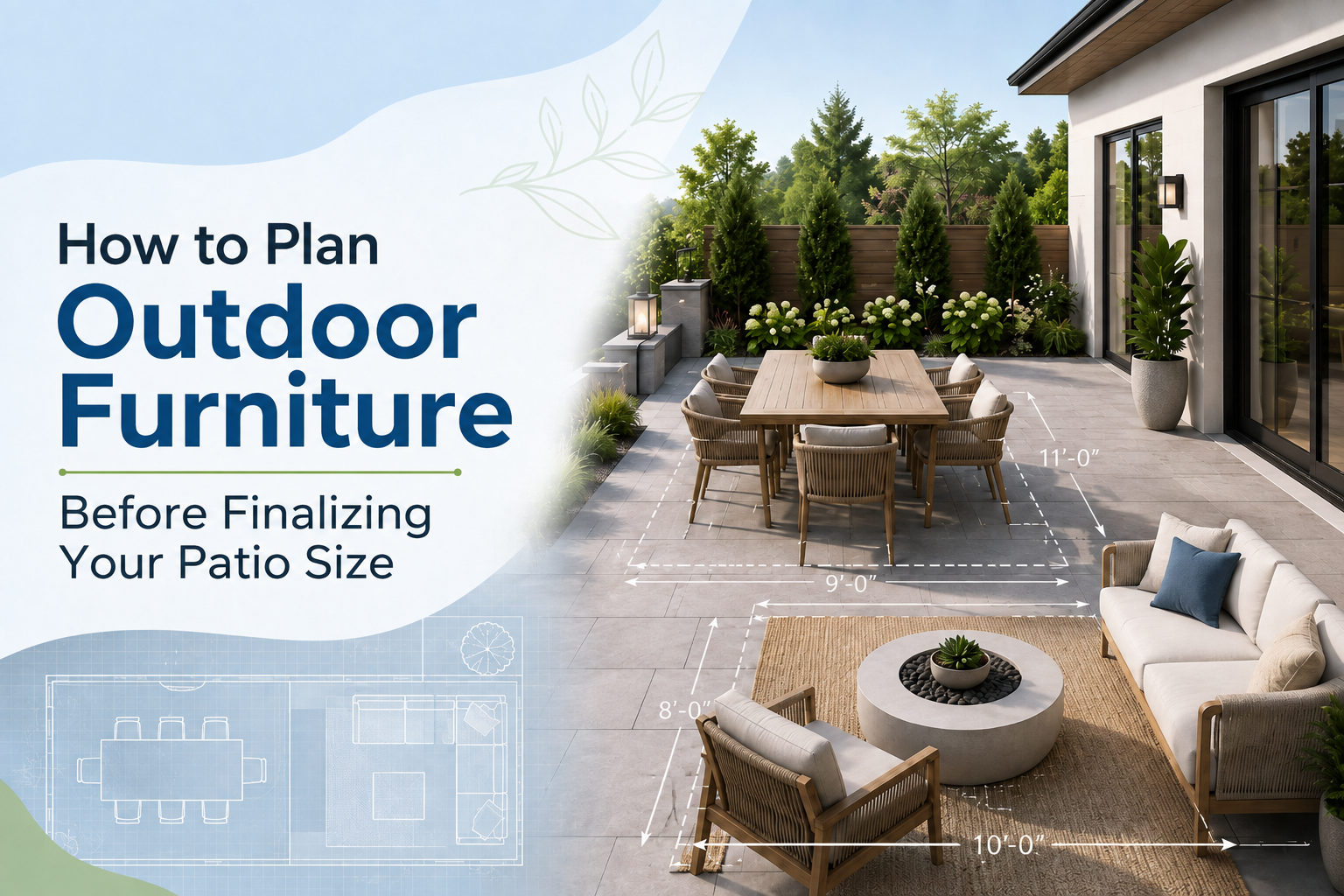
Plan around furniture before building
This is one of the biggest patio planning mistakes. Many people install the patio first and try to make the furniture fit later. That often leads to cramped seating, blocked paths, or a patio that looks bigger on paper than it feels in real life. Instead, decide early what furniture you want to use. Then plan the patio around that. You should account for:
- Table and chair size
- Walking room around furniture
- Grill clearance
- Extra room for planters or side tables
- Space for doors to open fully
A patio should feel easy to move through. If people have to squeeze between chairs or shift furniture every time they sit down, the layout is not working.
Connect the patio to the house naturally
A patio fits better when it feels like a natural extension of the home. That usually means paying attention to access points, floor height, visual flow, and material tone. If the patio sits right outside a back door, it should feel easy to step into. If it sits farther into the yard, the path to it should feel clear and inviting. Try to make the transition feel intentional by using:
- A simple walkway
- Matching or complementary materials
- Consistent color tones
- Repeated plants or containers near the house and patio
Even a small patio can feel much more integrated when the connection to the home is planned well.
Work with sun, shade, and wind
Comfort matters just as much as appearance. A patio may look perfect at noon in spring and feel unusable on hot summer afternoons. That is why climate conditions should be part of your plan from the start. If the patio gets strong sun, think about shade from umbrellas, pergolas, nearby trees, or covered structures. If it sits in a windy area, consider screening elements, plant borders, or layout changes that create more shelter. Also think seasonally. The spot that feels warm and pleasant in March may become too exposed in June. A patio that fits your outdoor space better will feel good across more than one season.
Pick materials that suit the setting
Patio materials affect more than looks. They influence the mood, maintenance level, and overall fit of the space. A material that looks beautiful in one yard may feel out of place in another. That is why it helps to choose materials that support the home style and landscape style around them. For example:
- Natural stone often feels timeless and high-end
- Concrete can look clean and modern
- Brick feels warm and classic
- Pavers offer flexibility and structure
- Gravel patios can work well in casual or cottage-style yards
The right material is the one that looks believable in the space, not just attractive on its own.
Do not ignore drainage and slope
A patio can never truly fit the yard if it fights the site conditions. Poor drainage, standing water, and awkward slope issues can quickly turn a beautiful patio into a frustrating one. Water should move away from the house and away from the patio surface in a controlled way.
If your yard has slope, that does not mean a patio is impossible. It just means the design should work with the grade. In some cases, a slightly raised patio, retaining edge, step-down layout, or split-level arrangement can fit the space better than trying to flatten everything aggressively. This is one area where planning matters far more than appearance.
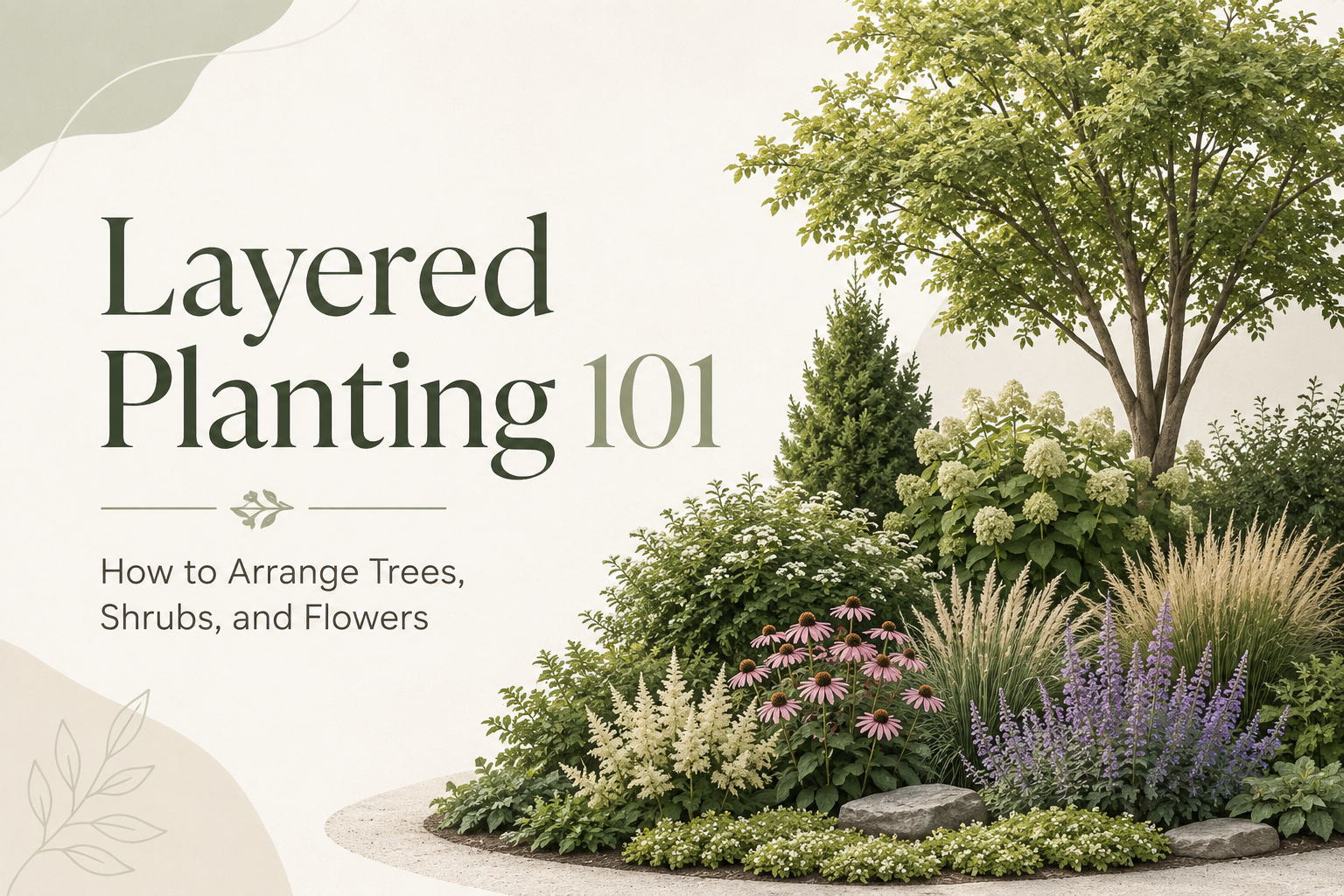
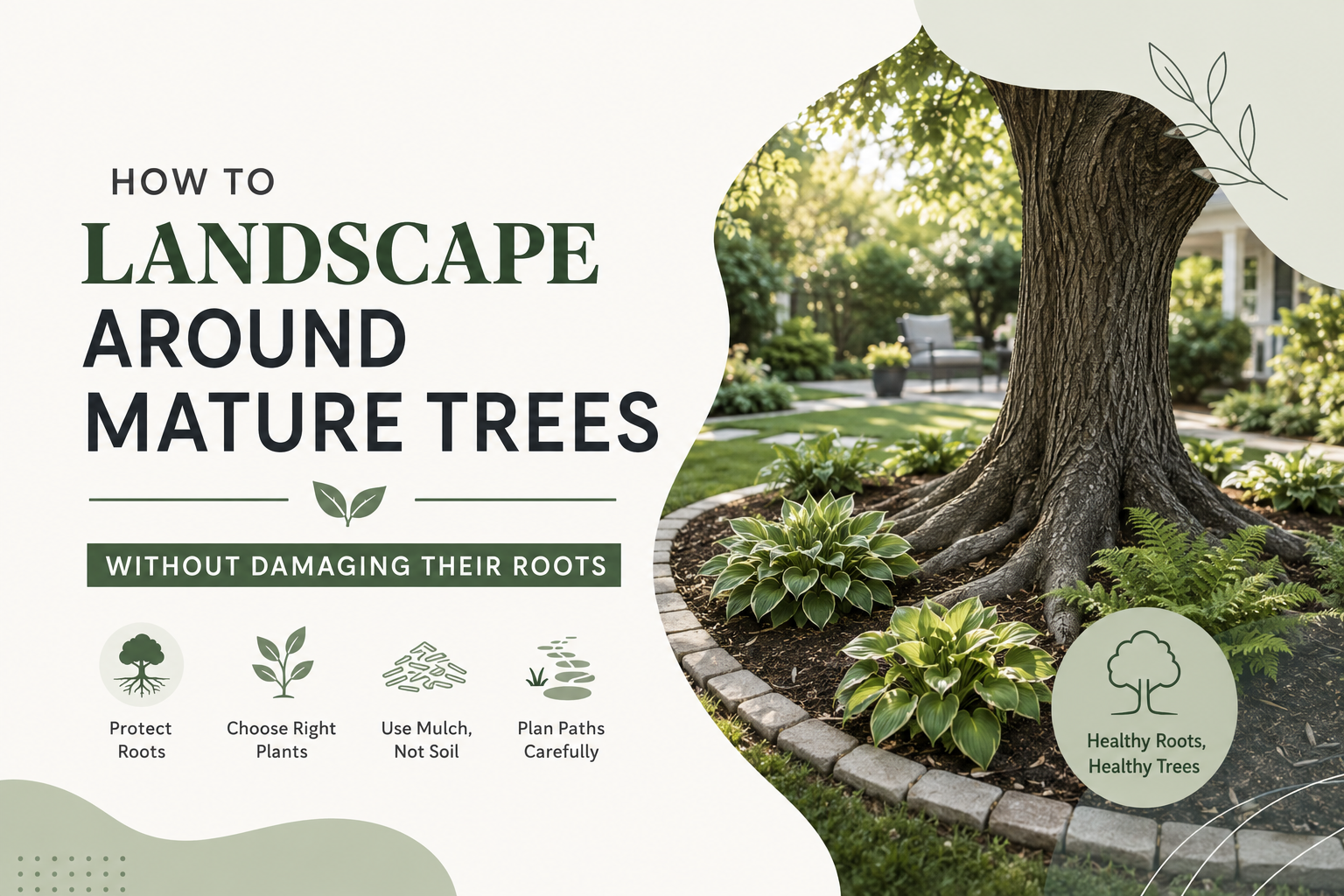
Leave room for the landscape
A patio should not erase the yard around it. One of the best ways to make a patio fit better is to soften it with landscape elements. Plants, borders, and nearby beds make the patio feel settled into the yard instead of isolated from it. You can do this with:
- Low planting beds around the edges
- Container groupings
- Ornamental grasses for movement
- Shrubs for structure
- Flowers for seasonal color
- Small trees for shade and scale
This is where good outdoor planning becomes more than just paving. The patio and landscape should support each other.
Think about privacy without closing the space off
A patio feels more comfortable when it has some sense of enclosure, but too much screening can make it feel boxed in. The best patio layouts usually balance openness and privacy. You may want to block a neighbor’s direct view while still keeping a nice line of sight to the garden. You may want a cozy seating area without making the patio dark or tight. Simple privacy solutions include:
- Tall planters
- Lattice panels
- Hedges
- Layered shrubs
- Outdoor curtains
- Pergolas with light screening
Use privacy where it improves comfort, not just where there is empty space.
Create flow, not just a destination
A patio should work as part of the whole outdoor experience. That means looking at how people enter, move through, and leave the space. A good patio layout makes walking paths feel natural. It does not block access to the lawn, squeeze circulation near doors, or create awkward dead corners. Try to think in terms of movement:
- How do you step onto the patio?
- Where do you go next?
- Can people move around furniture easily?
- Is there a clear path to the grill, garden, or gate?
Good patios feel easy to use because they respect how people move.
Add the right amount of detail
When homeowners want a patio to feel more finished, they sometimes add too much. Too many planters, too many colors, too many decor pieces, or too many competing materials can make the space feel cluttered. A patio that fits well often looks simpler because the layout itself is doing the work. A few well-chosen details usually go further:
- Warm outdoor lighting
- Two or three large planters instead of many small ones
- Coordinated cushions
- A rug that defines the seating area
- A focal point like a fire pit or statement planter
Keep the design clear. Let the patio breathe.
Use a landscape design app before you commit
One of the smartest ways to avoid patio planning mistakes is to visualize the layout before buying materials or moving forward with installation. That is where a landscape design app can be genuinely useful. Instead of guessing whether the patio is too large, too plain, or placed in the wrong spot, you can test ideas first. For homeowners who want to compare layouts, furniture positions, planting zones, and patio materials, a garden design app can make the planning process much easier.
If you want a tool built specifically for outdoor planning, iScape landscape design is one option to consider. On iScape’s official website, the company says the app lets users visualize landscape projects from a mobile device before spending real time and money, and it says the platform has nearly 4 million downloads. Its Google Play listing says the app helps users plan outdoor spaces with more accuracy, explore ideas before work begins, and organize project details more clearly, while its App Store listing says it is made for both DIY homeowners and industry professionals.
In practical terms, that can help with patio planning in a few simple ways. You can compare where the patio should sit, see whether the size feels too aggressive for the yard, test how plant beds might soften the edges, and get a clearer sense of how the finished space may look before you commit to a layout. That makes it easier to avoid costly mistakes and choose a patio design that actually fits the space.
Common patio planning mistakes to avoid
Even a nice-looking patio can feel wrong if the planning is off. Some of the most common issues include:
Making the patio too big: A patio that dominates the yard can leave the rest of the space feeling stripped down or unbalanced.
Making the patio too small: A patio should not force people to squeeze around furniture or sit too close together.
Choosing style before function: A patio has to support real use, not just visual appeal.
Ignoring the sun path: A beautiful patio in the wrong light can become uncomfortable fast.
Skipping landscape integration: Hard surfaces usually look better when softened with planting and edges.
Forgetting long-term maintenance: The best patio materials are not just attractive. They should also match how much upkeep you are willing to handle.
Final thoughts
Creating a patio that fits your outdoor space better is really about paying attention to proportion, purpose, comfort, and connection. The best patios do not just look good in isolation. They feel right in the yard. They match the home, support the way you live, leave room for landscape elements, and make outdoor time easier to enjoy.
If you approach the project by starting with use, studying the yard, planning around furniture, and testing ideas before building, you are much more likely to end up with a patio that feels natural instead of forced. That is what turns a simple patio into a space that truly works.
FAQs
What size patio is best for a backyard?
The best patio size depends on how you want to use it, how much furniture you need, and how much open yard you want to keep. A patio should feel balanced within the full outdoor layout, not simply as large as possible.
How do I know if my patio is too big for my yard?
A patio may be too big if it takes away too much green space, overwhelms the shape of the yard, or leaves little room for movement and planting. If the hardships become the only thing you notice, the scale may be off.
What is the best location for a patio?
The best location usually depends on access from the house, sunlight, privacy, drainage, and how you want to use the space. A convenient and comfortable spot often works better than a visually empty corner that looks good but feels disconnected.
Should a patio be attached to the house?
Not always. Attached patios are often convenient for dining and entertaining, especially near kitchens and back doors. Detached patios can work well for quiet seating areas, fire pit zones, or garden retreats.
How can I make a small patio fit better?
Keep the layout simple, choose furniture that matches the scale, avoid clutter, and use planting to soften the edges. In small spaces, good proportion matters even more.
Can a landscape design app help with patio planning?
Yes. A good landscape design app can help you compare patio placement, test size ideas, preview planting around the hardscape, and make better decisions before installation. Official iScape materials describe the app as a tool for visualizing outdoor projects before spending on them.
A patio works best when it fits your yard and the way you want to use it. With iScape landscape design tools, you can explore layouts, compare ideas, and plan your space with more confidence before you build.
Download iScape on the App Store or Google Play Store today and start designing. Start Free Trial, Try iScape Today!