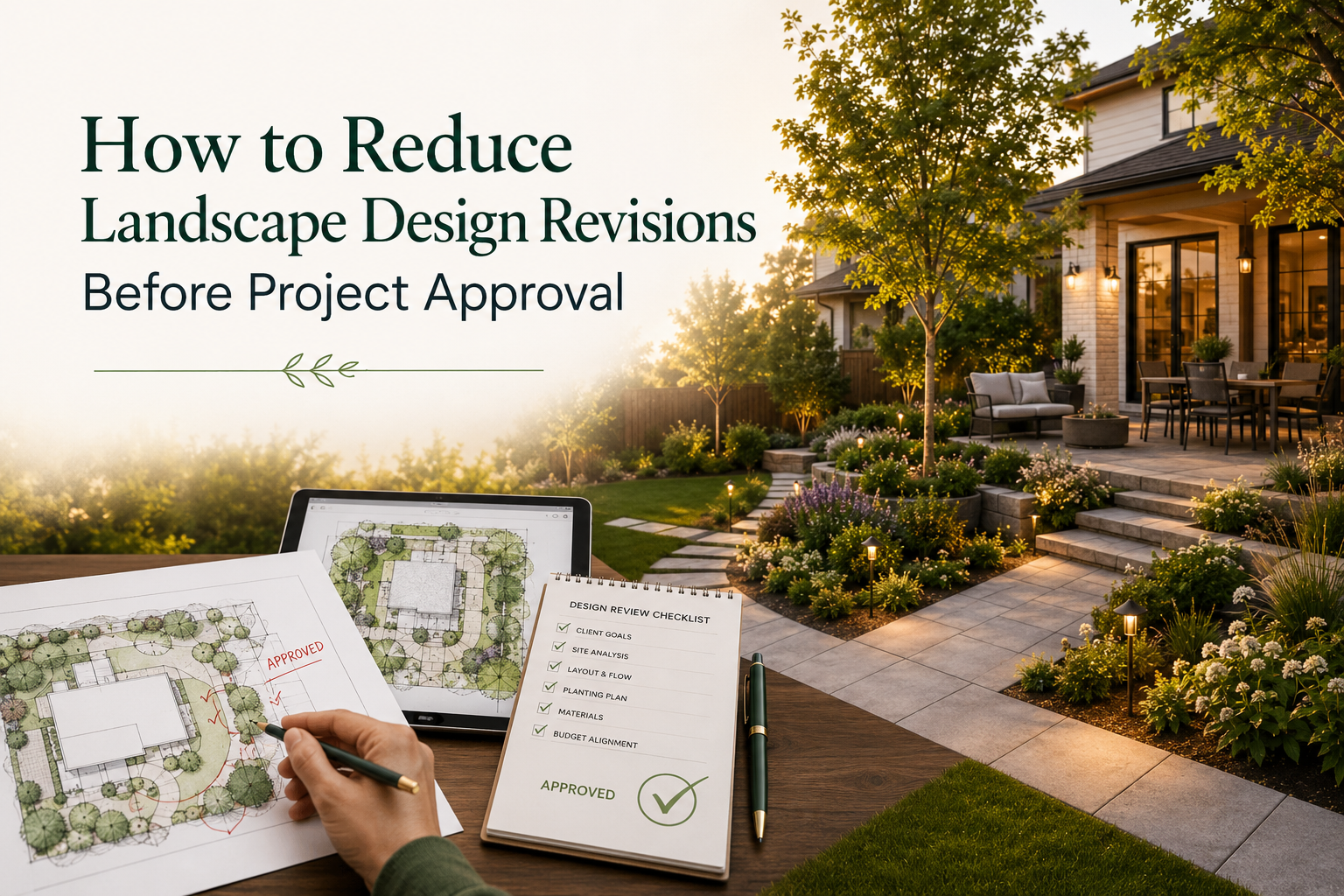
Landscape design revisions are common, but too many rounds of changes can slow down approval, increase project costs, and create confusion between homeowners, designers, and contractors. Most revisions happen because the design direction, budget, site conditions, or visual expectations were not clear enough at the start. A smooth approval process begins before the first design is created. When the project brief is clear, the budget is realistic, the site details are accurate, and the design is easy to visualize, clients can give better feedback earlier. This helps reduce major changes later and keeps the project moving toward approval. Whether you are a homeowner planning a yard update or a landscaping professional presenting a design to a client, the goal is the same: create a design that is clear, practical, and easy to approve.
Why landscape design revisions happen
Landscape design is both visual and functional. A yard has to look good, but it also has to work for daily life. It may need to support outdoor seating, walkways, privacy, children, pets, drainage, sunlight, lawn care, plant maintenance, and long-term property value. Revisions usually happen when one or more of these details are unclear. A client may like the overall idea but feel unsure about the patio size. A walkway may look attractive but not feel practical. A plant layout may look full in the design but become difficult to maintain later. Common reasons for revisions include:
- Unclear project goals
- Budget mismatch
- Missing site measurements
- Poor visual communication
- Too many material or plant options
- Lack of agreement between decision-makers
- Late changes to the project scope
- Designs that do not match maintenance expectations
The best way to reduce revisions is not to rush the approval stage. It is to build a stronger planning process before the design reaches that stage.
Start with a clear project brief
A project brief gives the design a clear direction. Without it, the first design often becomes a guessing exercise. The brief should explain what the client wants to achieve and why. For example, the goal may be to improve curb appeal, create a backyard entertaining space, design a safer walkway, reduce lawn maintenance, add privacy, or plan a low-water yard. A strong brief should include:
- Main project goal
- Preferred design style
- Must-have features
- Features the client does not want
- Budget range
- Maintenance expectations
- Timeline
- Existing site problems
- Areas that need privacy, shade, or better access
This step helps the designer understand the real purpose of the project. It also helps the client think through priorities before seeing the first layout. For homeowners who are still exploring ideas, using a landscape design app can help organize early thoughts before the design process begins.
Define the budget before the design starts
Budget is one of the biggest reasons landscape designs get revised. A design may look beautiful, but if it includes expensive hardscaping, mature trees, custom lighting, retaining walls, or premium materials, it may not match what the homeowner expected to spend. Budget should guide the design from the beginning. It should not be discussed only after the design is complete. Instead of working with a vague idea, it is better to create a realistic budget range. This allows the designer to recommend options that fit the client’s comfort level. It also makes it easier to divide the project into phases if needed. For example:
- Phase one may include grading, patio installation, and main walkways.
- Phase two may include planting, lighting, and decorative details.
- Phase three may include a pergola, fire pit, or outdoor kitchen.
A phased plan helps the client approve the design without feeling forced to complete everything at once.
Use visual references before creating the first design
Words like modern, cozy, simple, natural, and low-maintenance can mean different things to different people. Visual references reduce this confusion. Before the design begins, homeowners should collect images of yards, patios, walkways, plants, fences, lighting, and outdoor furniture they like. It is also helpful to collect examples they dislike. This gives the designer a better understanding of the client’s taste. The goal is not to copy another landscape. The goal is to identify patterns. A client may prefer clean lines, soft planting, tropical greenery, drought-tolerant plants, gravel pathways, or a mix of lawn and hardscape. For more inspiration, homeowners can explore iScape’s design inspiration blog to compare different outdoor planning ideas.
Confirm site conditions early
A landscape design should be based on the real site, not assumptions. Missing site details can lead to major revisions later. Before creating or approving a design, confirm:
- Yard measurements
- Sun and shade exposure
- Slope and drainage
- Soil condition
- Existing trees and plants
- Utility locations
- Property lines
- Irrigation access
- Existing patios, walkways, fences, and driveways
- Areas where people naturally walk or gather
For example, a patio may need to move if the area collects water after rain. A planting bed may need to change if it blocks a natural walking path. A privacy screen may need to be taller or denser depending on nearby windows or street views. The more accurate the site information is, the fewer corrections will be needed later.
Separate must-have features from optional ideas
Not every idea has the same importance. Some features are essential, while others are nice additions. Before the design begins, divide the project into two groups: must-have features and optional features. Must-have features may include:
- Safe walkways
- Drainage correction
- Usable lawn space
- Outdoor dining area
- Privacy planting
- Low-maintenance beds
- Clear front entry path
Optional features may include:
- Fire pit
- Water feature
- Pergola
- Decorative lighting
- Extra seating
- Raised planters
- Outdoor kitchen
This helps the designer make better choices when space or budget is limited. It also makes revisions more focused because everyone understands what matters most.
Review the layout before discussing small details
A common mistake is reviewing plants, furniture, colors, and materials before the main layout is approved. This can create scattered feedback and repeated changes. The first review should focus only on the big layout decisions:
- Where should the patio go?
- How should people move through the space?
- Where should planting beds be placed?
- Does the lawn size make sense?
- Are privacy areas in the right location?
- Are walkways wide and practical?
- Does the design support how the yard will be used?
Once the layout is approved, the next review can focus on plants, materials, lighting, furniture, and finishing details. This step-by-step approach prevents backtracking. For example, there is no need to choose patio pavers if the patio location has not been approved yet.
Use iScape to preview ideas before approval
Many revisions happen because clients cannot clearly imagine the final result from a flat sketch or verbal explanation. A visual preview can make the design easier to understand. With iScape for homeowners, users can visualize outdoor spaces before spending time or money on real changes. This makes it easier to compare ideas, test layouts, and see how different elements may look in the actual yard. A design app can help clients preview:
- Plant placement
- Patio size
- Walkway direction
- Lawn reduction
- Privacy screening
- Outdoor furniture placement
- Hardscape and softscape balance
- Mulch, gravel, and bed shapes
For example, a homeowner may realize that a planting bed looks too crowded, a walkway feels too narrow, or a patio needs more room for seating. These are easier to adjust during planning than after materials are ordered. For more related guidance, read How to Use iScape to Plan Privacy, Pathways, and Plant Placement.
Keep plant choices realistic
Plant revisions are very common. A client may like a certain plant because of its color or shape, but it may not be right for the climate, sunlight, soil, water needs, or maintenance level. Good plant planning should consider:
- Mature plant size
- Growth rate
- Seasonal appearance
- Water needs
- Sun and shade requirements
- Maintenance level
- Spacing
- Local climate suitability
Avoid overcrowding the design just to make the plan look full at the start. Plants need room to grow. A layout that looks slightly open at installation may look balanced after one or two growing seasons. If the project needs lower water use, this guide on planning a low-water yard that still looks green, soft, and welcoming can support the plant selection process.
Discuss maintenance expectations early
A design may look great in the approval stage but become frustrating later if it requires too much maintenance. Some homeowners enjoy gardening, trimming, seasonal flowers, and plant care. Others want a yard that looks polished with minimal work. This should be discussed before the design is finalized. Maintenance questions may include:
- How often does the homeowner want to trim plants?
- How much lawn care are they comfortable with?
- Do they want seasonal flowers or permanent planting?
- Do they prefer mulch, gravel, or groundcover?
- Will the yard need irrigation?
- Are there pets or children using the space?
Low-maintenance designs often use simple lawn shapes, grouped planting, durable hardscape, mulch, climate-suitable plants, and fewer high-care features. When the maintenance level matches the homeowner’s lifestyle, fewer changes are needed after the design review.
Plan driveways and walkways carefully
Driveways and walkways often need revisions because they affect both function and curb appeal. They must look good, but they also need to support safe movement, parking, drainage, and daily access. Before approving these areas, check:
- Walkway width
- Entry direction
- Border placement
- Plant height near paths
- Lighting needs
- Drainage around paved areas
- Visibility from the street
- Access to doors, gates, and garages
A walkway that looks attractive but feels too narrow may need to be changed. A driveway border that looks beautiful but traps water can create future problems. For more detail, read 6 Smart Ways to Plan Landscaping Around a Driveway or Walkway.
Make material choices easier
Too many material options can slow down approval. Pavers, gravel, stone, concrete, mulch, decking, edging, fencing, and outdoor tiles all affect the final design and budget. Instead of presenting too many choices, narrow the options to a few that match the design style, budget, and site conditions. For example:
- A modern yard may use large pavers, gravel, clean edging, and simple planting.
- A natural garden may use stone paths, curved beds, mulch, and soft plant layers.
- A low-water yard may use gravel, drought-tolerant plants, mulch, and limited lawn.
- A family backyard may use durable pavers, open lawn, and easy-care planting.
When materials are selected with a clear reason, clients can make decisions faster. For patio-specific planning, this guide on how to design a patio in iScape can help clients think through shape, size, and layout before approval.
Ask for specific feedback
General feedback creates more revisions. Comments like “I don’t love it” or “Can we make it better?” do not tell the designer what needs to change. Specific feedback is much more useful.
Instead of saying: “I don’t like the backyard.” Say: “The seating area feels too close to the fence, and I want more planting around the patio.”
Instead of saying: “The front yard feels plain.” Say: “I want more color near the entry and a stronger border along the walkway.”
Helpful feedback questions include:
- Does the layout match how the space will be used?
- Does the design feel too full or too empty?
- Are the walkways and seating areas practical?
- Does the plant style match the homeowner’s taste?
- Are any areas missing shade, privacy, or color?
- Does the design fit the budget and maintenance level?
Better feedback leads to better revisions and faster approval.
Get all decision-makers involved early
Design revisions often happen when one person approves the concept, but another person gives feedback later. This can happen with spouses, family members, property managers, HOA boards, or business partners. To avoid this, involve all key decision-makers early. They should agree on the main goals, budget, layout, and style direction before the design moves too far. This is especially important for:
- Front yard projects
- Large backyard designs
- HOA-regulated properties
- Rental properties
- Commercial landscapes
- Shared outdoor spaces
Early agreement prevents late-stage redesigns.
Check HOA rules, permits, and local requirements
Some landscape designs need changes because they do not meet local rules or HOA guidelines. These requirements should be checked before final approval. Rules may affect:
- Fence height
- Tree removal
- Retaining walls
- Drainage changes
- Driveway extensions
- Outdoor structures
- Lighting
- Water use
- Front yard appearance
- Hardscape coverage
Checking these details early can prevent delays and expensive redesigns.
Use approval checkpoints
Approval should not happen only at the final stage. Smaller checkpoints make the process easier to manage. A simple approval flow may include:
1. Concept approval
This confirms the overall design direction, style, and main goals.
2. Layout approval
This confirms patios, walkways, lawn areas, planting beds, privacy zones, and focal points.
3. Plant and material approval
This confirms plant types, hardscape materials, mulch, gravel, edging, lighting, and furniture direction.
4. Final design approval
This confirms the full design before installation planning begins. These checkpoints help everyone stay aligned and reduce the chance of major last-minute changes.
Document approved decisions
Design decisions should not live only in conversations. They should be documented clearly. Keep a record of:
- Approved layouts
- Selected plants
- Chosen materials
- Budget notes
- Removed features
- Future phase ideas
- Revision requests
- Final approval comments
This protects both the homeowner and the designer. It also makes the design easier to share with contractors or installers. A visual tool can also help with documentation. Homeowners can use iScape to try multiple yard ideas using a landscape design app before narrowing down the final version.
Avoid changing the project goal midway
Some revisions happen because the project goal changes after design work has already started. For example, a simple front yard refresh may turn into a full outdoor living plan with a patio, fire pit, privacy wall, and new lighting. Changing the goal is sometimes necessary, but it should be treated as a scope change, not a small revision. A new goal may require a new layout, new budget, and new timeline. To avoid this, define the main purpose of the project before design work begins. A focused goal leads to a clearer design and faster approval.
Final thoughts
Landscape design revisions are not always bad. A few thoughtful changes can improve the final result. The problem starts when revisions become unclear, repeated, or too late in the process. The best way to reduce revisions before project approval is to plan carefully from the beginning. Create a clear brief, define the budget, confirm site conditions, collect visual references, and review the design in stages. Use tools like iScape to preview ideas before real work begins, and keep feedback specific.
When homeowners and landscape professionals follow a structured process, the design becomes easier to understand, easier to approve, and easier to build. The final result is a landscape that looks good, functions well, and fits the way the outdoor space will actually be used.
FAQs
Why do landscape designs need so many revisions?
Landscape designs often need revisions when the project goal, budget, layout, site conditions, or visual expectations are not clear at the start. Clear planning and visual previews can reduce these changes.
How can homeowners reduce revisions before approval?
Homeowners can reduce revisions by sharing a clear brief, setting a realistic budget, collecting visual references, confirming site details, and giving specific feedback during each review stage.
Can a landscape design app help reduce revisions?
Yes. A landscape design app can help homeowners and professionals preview layouts, plant placement, hardscape areas, and outdoor features before making final decisions.
What should be approved first in a landscape design?
The layout should be approved first. This includes patios, walkways, lawn areas, planting beds, privacy areas, and main outdoor zones. Details like plants and materials should come after the layout is confirmed.
Why is budget important before design approval?
Budget helps guide design decisions from the beginning. It prevents the design from including features, materials, or planting choices that may be too expensive or unrealistic for the project.