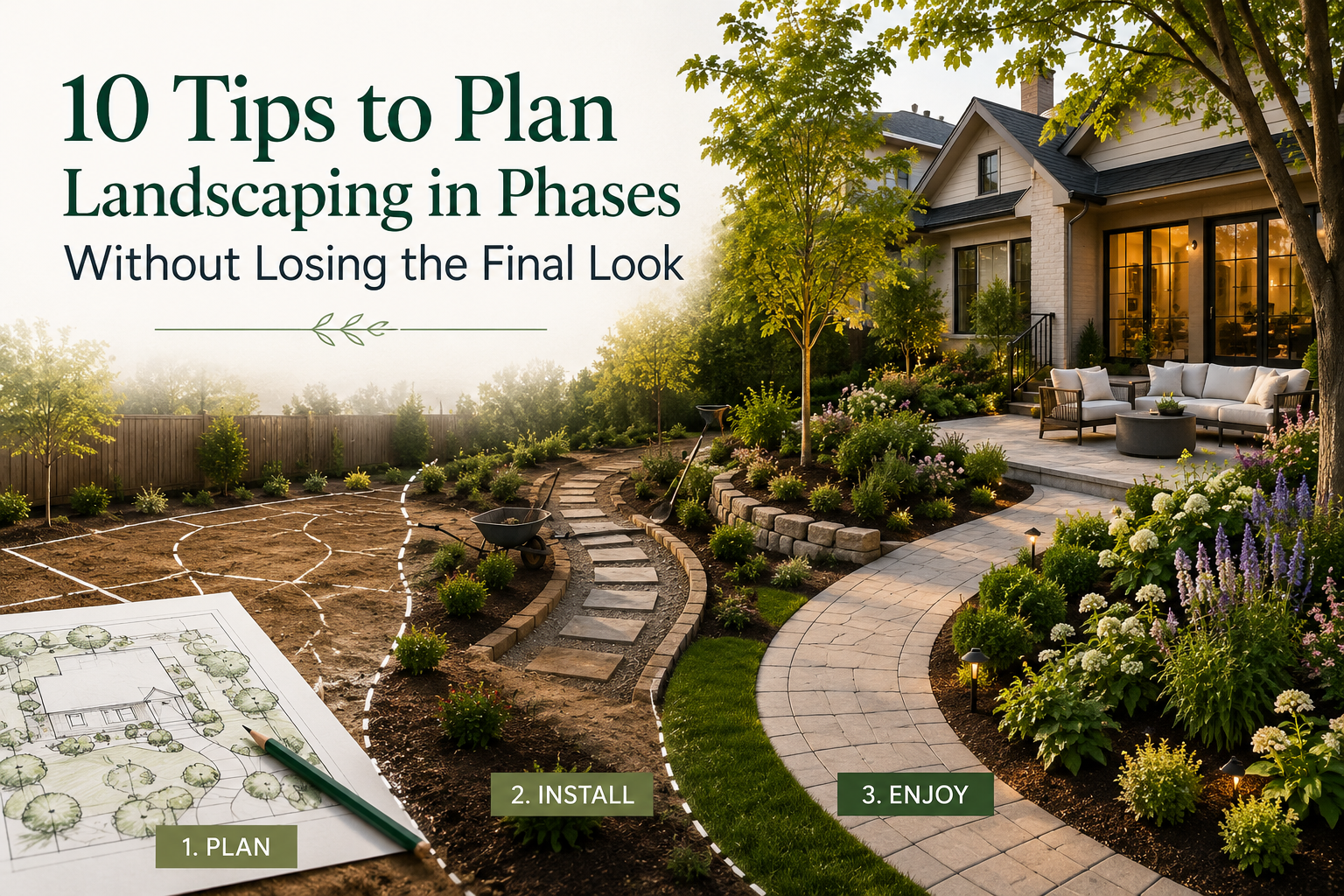
Landscaping in phases is one of the smartest ways to improve an outdoor space without taking on the full cost, time, and disruption all at once. The problem is that phased projects can easily start to feel disconnected. One year you add a walkway, the next year you plant shrubs, and later you try to squeeze in lighting or seating. Instead of looking intentional, the yard can end up looking like a collection of separate projects. That usually happens when people phase the work without planning the full design first.
A better approach is to decide where the yard is going before you start building any part of it. Once the full picture is clear, you can break the work into manageable steps while still protecting the final look. Tools like iScape for homeowners can help you visualize the complete design early, so each phase feels like part of one finished plan instead of a random update.
Here are 10 practical tips to help you phase a landscape project the right way.
1. Start with the full design, not the first phase
The biggest mistake in phased landscaping is planning only what you can afford right now. That may feel practical in the moment, but it often leads to wasted work later. A bed may end up in the wrong place, a path may need to shift, or plants may outgrow the layout you eventually want.
Start by mapping the full yard first. Think about how you want the space to look and function when everything is done. Decide where the main features belong, including lawn areas, planting beds, patios, pathways, privacy screening, lighting, and gathering spaces.
Once the full layout is clear, then you can break it into stages. This is also where digital planning helps. Trying multiple yard ideas before building makes it much easier to test what should happen now and what can wait until later.
2. Break the project into logical phases
Not every phase should be based only on budget. It should also be based on how the landscape is built. A smart phased plan often follows this order:
- site cleanup and prep
- grading or drainage corrections
- hardscape and utility work
- trees and major planting
- smaller plantings and decorative layers
- lighting, furniture, and finishing touches
This order matters because some work affects everything that comes after it. For example, if you install planting beds before fixing drainage or digging for a patio, you may end up tearing out work you already paid for. When the phases follow the actual structure of the project, the yard stays more organized and the finished look is easier to protect.
3. Solve drainage and grading issues early
Good landscaping is not only about looks. It also has to work. Water that sits near the house, runs across walkways, or pools in planting beds can damage both the design and the property.
That is why drainage, slope, and grading should be addressed before you focus on decorative improvements. A beautiful phase one can quickly become a frustrating phase one if the first heavy rain exposes problems underneath it.
This is also a good time to think long term about irrigation and water movement. Guides from Utah State University Extension on water-wise landscaping and the EPA’s landscaping tips are useful references when you want a yard that looks good and wastes less water.
4. Install the “bones” of the yard before the details
Every strong landscape has a structure. That structure comes from the elements that shape movement and define space, such as patios, edging, walls, steps, pathways, and major trees.
These are the parts that make the yard feel settled and intentional. They should usually come before smaller decorative features because they influence the size, flow, and proportions of everything else.
Think of them as the bones of the design. Once they are in place, it becomes much easier to add the softer layers around them without losing the final look.
5. Choose your plant style and material palette from day one
A phased landscape looks unfinished when every stage introduces a different style. One area feels modern, another feels rustic, and another looks tropical even though the house does not support that look. To avoid that, choose your visual direction early. Decide on the overall plant character, material palette, and color mood before you begin. That includes choices like:
- gravel or mulch color
- edging material
- paver or stone tone
- fence or screen style
- plant forms and texture
- whether the yard should feel lush, clean, natural, formal, or low maintenance
You do not need to buy everything at once, but you should know what belongs in the design and what does not. That gives each new phase a consistent visual language.
6. Leave room for future phases
A common phased landscaping mistake is filling every open space too early. At first, the yard may look fuller and more finished, but later it becomes harder to add the patio, path, lighting, or screen that was always part of the long-term plan.
Leave space where future elements will go. That may mean keeping an area simple for now, using mulch as a temporary finish, or planting fewer shrubs than you eventually want.
This is especially important with plant spacing. Trees and shrubs grow. A yard that looks slightly open in the first season often looks more balanced later. Overplanting too early usually leads to crowding, pruning stress, or expensive rework.
7. Improve the soil before adding lots of plants
Planting in phases does not mean skipping site preparation. In fact, phased projects benefit even more from good soil work because each phase has to establish well on its own.
Before planting heavily, pay attention to compaction, drainage, and soil health. Adding organic matter can help improve how soil accepts and stores water, which supports healthier planting over time. Oregon State Extension explains this well in its guide to improving garden soils with organic matter.
This is not the most exciting part of landscaping, but it is one of the most valuable. Strong soil helps each phase look better, settle faster, and require fewer corrections later.
8. Plan irrigation by zones, not by habit
Many phased landscapes become messy because watering is treated as an afterthought. One section gets too much water, another dries out, and the plant palette starts to feel inconsistent because the conditions are inconsistent.
Even if you are not installing the full irrigation system right away, think about watering zones from the beginning. Group plants with similar water needs together. Keep lawn areas separate from low-water planting zones where possible. Do not mix thirsty plants and drought-tolerant plants in the same small bed unless you are ready for ongoing maintenance problems. If water efficiency is part of the goal, this low-water yard guide can help you build a phased plan that still feels soft, green, and welcoming.
9. Finish each phase cleanly
A phased landscape does not need to look half-done between stages. Even when a project is incomplete, each finished section should feel neat and intentional.
That means closing each phase properly. Define bed edges. Spread mulch evenly. Clean up temporary materials. Make sure transitions look deliberate. If a future patio area will stay open for a while, keep it tidy and clearly shaped instead of leaving it vague and unfinished.
This one habit makes a major difference. A clean temporary finish helps the yard feel calm and cared for, even while the full plan is still in progress. It also reduces the feeling that the project is dragging. Visually, you still get a sense of progress.
10. Keep one master plan and review it before every new phase
As time passes, it is easy to drift. Budgets change, ideas change, and a good sale at the garden center can tempt you to buy something that does not belong in the original plan.
That is why every phased landscape needs one master reference. It can be a digital design, a marked-up image, or a detailed sketch, but it should show the full intended result.
Before starting a new phase, review that plan again. Check that the next step still fits the layout, spacing, budget, and style. This is one of the easiest ways to avoid design drift and keep the project looking unified from start to finish. It also helps reduce expensive second-guessing later. This article on reducing landscape design revisions before project approval supports that same idea from a planning perspective.
Final thoughts
Landscaping in phases does not have to mean compromising the final result. In many cases, phased work leads to better decisions because it gives you time to plan carefully, prioritize wisely, and build with more intention. The key is simple: design the whole yard first, then build it in parts.
When each phase is connected to a full plan, the finished landscape feels cohesive, balanced, and complete even before the last detail goes in. If budget is part of the reason you are phasing the project, this budget-friendly yard makeover guide is a strong companion piece because it shows how to improve a yard step by step without losing direction.
A phased landscape should feel like a story that unfolds in the right order, not a patchwork of unrelated decisions. When the structure is right from the beginning, the final look stays intact.