Top 9 Affordable Ways to Boost Your Home’s Curb Appeal This Spring
February 24, 2026
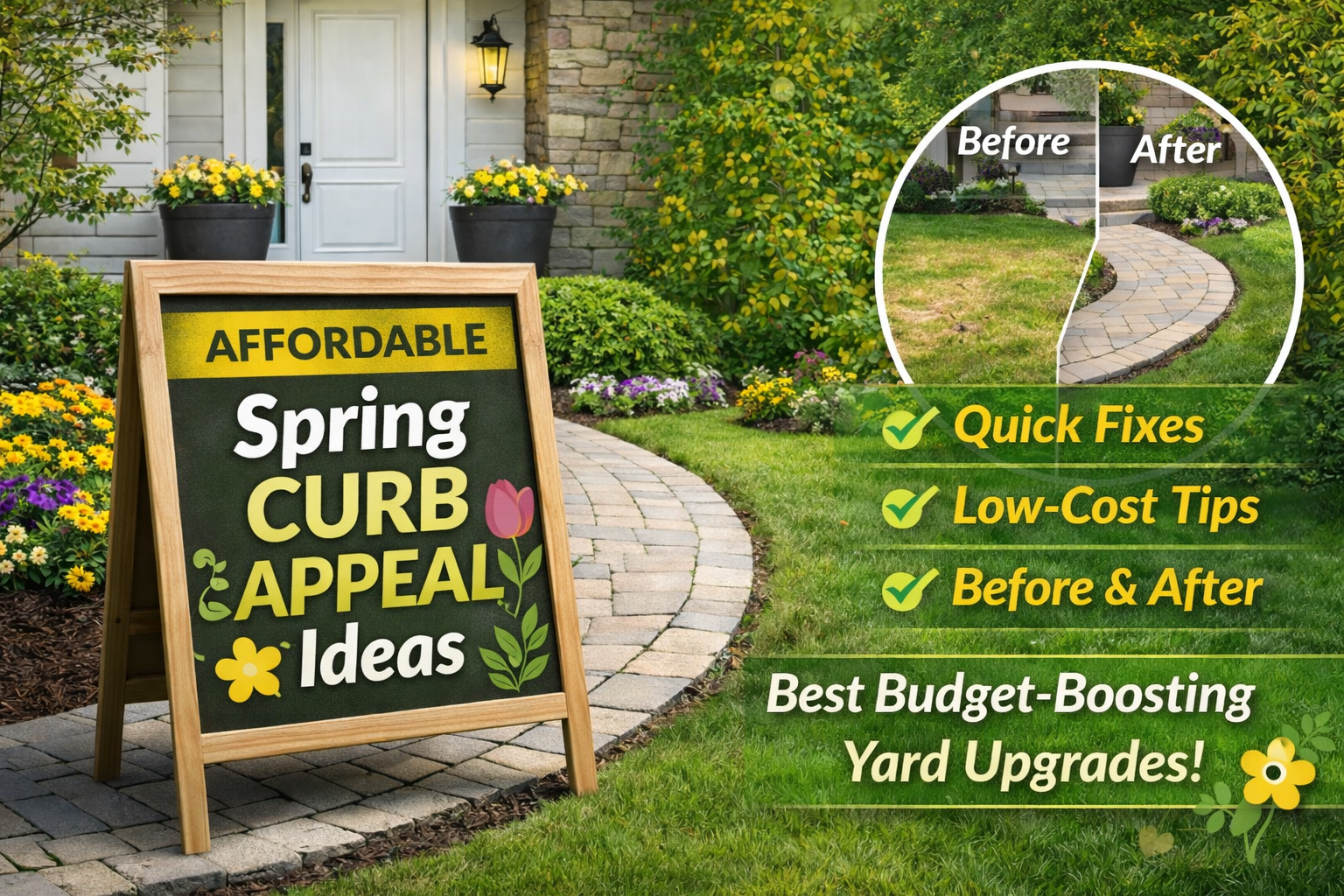
Spring is when your home’s exterior gets noticed again. Lawns start growing, plants wake up, and neighbours spend more time outside. It’s also the easiest season to make your property look “fresh” without spending like you are doing a full renovation.
The good news is that curb appeal is not built by expensive features. It is built by clean lines, healthy greenery, tidy surfaces, and one or two intentional focal points. Even real estate research consistently shows that well-planned landscaping and maintenance can raise perceived value and buyer interest.
Below are practical, affordable upgrades that work for homeowners doing weekend projects and professionals looking for fast, high-impact spring packages.
1) Start With “Free Curb Appeal”: Clean, Declutter, Reset
Before you buy anything, remove what makes the exterior look busy or neglected. This is the highest ROI step because it costs almost nothing and instantly changes first impressions. Focus on:
- Pulling weeds from cracks, bed edges, and fence lines
- Storing toys, hoses, tools, and random planters
- Hiding bins, coiling cords, and clearing porch clutter
- Removing dead plants and old decor that looks dated
This sounds basic, but it is exactly the kind of step real estate guides recommend because it creates a “well cared for” signal.
Pro tip (for landscapers): This is a perfect “Phase 1” add-on for spring cleanups. When you price it as a defined scope (beds + porch + driveway edges), clients see value quickly.
2) Power Wash the Surfaces That Steal Attention
Grime makes homes look older than they are. If you clean only one thing this spring, clean the surfaces people step on and walk past. High-impact areas:
- Walkways and front steps
- Driveway edges and apron
- Porch slab, patio pavers, deck boards
- Fence panels near the front entry
Renting equipment can be cheaper than repainting or resurfacing, and the “after” looks dramatic.
Budget range: typically low (rental or a local one-time service), but the visual lift is big.
3) Fix the Edges: The Cheapest Way to Look “Professionally Done”
Curb appeal is mostly about lines. Crisp edges make any yard look planned, even if the plants are simple. Do these in order:
- Re-cut bed edges (clean curve or clean straight line)
- Pull grass that creeps into beds
- Add a fresh top layer of mulch to unify the look
Mulch is one of the best “cheap + instant” upgrades, but don’t overdo it. A clean, even layer looks premium; a thick mound looks messy.
Pro angle: Sell this as a “Spring Edge + Mulch Reset.” It’s easy to explain, easy to photograph, and clients love the immediate transformation.
4) Use Color Strategically: One Strong Moment Beats Many Random Flowers
A common mistake is scattering small pops of color all over the yard. Instead, create one intentional color moment near the entry. Affordable ways:
- Two matching planters by the front door
- A simple cluster of 3 pots at different heights
- Hanging baskets only if the porch is already clean and uncluttered
Choose a tight palette (example: white + purple, or yellow + blue) so it looks designed, not accidental.
Budget tip: Containers can be updated seasonally without replanting the entire yard.
5) Upgrade the Front Door Area Without Replacing the Door
Your entry is your “curb appeal headline.” You can refresh it without major expense. Quick wins:
- Paint the front door (or just the trim if the door is fine)
- Replace a worn doormat with something simple and clean
- Update house numbers (modern, easy-to-read style)
- Add one statement light fixture if the current one looks dated
These changes are small, but they are exactly where the eye lands first.
6) Improve Lighting Placement Before Buying More Lights
Outdoor lighting feels expensive when it is done well. It looks cheap when it is random.
Instead of adding many fixtures, focus on placement:
- One light that clearly covers the entry
- Low lighting that guides a path (only where people walk)
- A soft light on one feature (a tree, a front bed, or a textured wall)
Lighting is also one of the outdoor upgrades REALTORS often recommend because it improves both appearance and function.
7) Patch the Lawn the Smart Way (Don’t Chase Perfection)
A perfect lawn is not required. A healthy-looking lawn is. Affordable spring lawn fixes:
- Rake out dead thatch in thin spots
- Top-dress lightly with compost in patchy areas
- Overseed where needed (not everywhere)
- Water consistently for the first few weeks
If you are hiring a pro, a “standard lawn care service” or maintenance plan often delivers strong results for cost, and some reports show it can be one of the highest ROI outdoor categories.
8) Add One “Structure” Plant That Makes the Yard Look Mature
If your front yard feels flat, you may not need more flowers. You may need structure. Affordable structure options:
- A small ornamental tree (if space allows)
- Two matching shrubs framing a path or entry view
- A neat row of low shrubs to define a bed line
Even research on perceived home value shows that moving from little/no landscaping to well-planned landscaping can meaningfully change how people value a property.
Important: Buy fewer plants, place them well, and give them room to grow. Crowding looks messy by midsummer.
9) Refresh the “Hardscape Details” That Make Homes Look Tired
These are the small fixes that quietly upgrade the whole exterior:
- Re-set wobbly pavers near the entry
- Touch up chipped edging or cracked borders
- Refill gravel paths where they look thin
- Fix a gate that doesn’t close cleanly
They are not glamorous, but they remove the “something feels off” effect.
How iScape Helps You Boost Curb Appeal Without Overspending
Spring upgrades get expensive when you buy materials first and “figure it out later.” The easiest way to stay affordable is to plan visually before you spend. With the iScape app, you can:
- Take a photo of your front yard and design directly on top of it
- Test bed shapes and edging lines so your curves look intentional
- Preview mulch, pavers, and materials before you order anything
- Try different plant groupings to see what looks balanced (not crowded)
- Compare options side-by-side (Plan A vs Plan B) and choose the best value
For professionals, iScape also helps you move faster:
- Show clients a clearer concept early, so you avoid long back-and-forth
- Present 2–3 clean options instead of endless revisions
- Help clients approve layouts with confidence because they can “see it”
When you can preview the look first, you spend money only on what actually improves the view.
Download iScape on the App Store or Google Play Store and mock up your front-yard refresh on a real photo before you buy plants or materials.
A Simple Budget-Friendly Spring Game Plan
If you want the most impact with the least spend, do this order:
- Clean + declutter
- Power wash key surfaces
- Edge beds + refresh mulch
- Add intentional entry color (containers)
- Fix lawn patches and one structural plant
- Lighting placement upgrades
That sequence avoids wasted purchases and keeps your curb appeal looking “designed,” not just decorated.
Want to boost curb appeal this spring without guessing? Download iScape on the App Store or Google Play Store and design your front yard on a photo of your home. You will make faster decisions, avoid costly mistakes, and spend only on upgrades that clearly improve the street view.
FAQs
1) What is the cheapest way to improve curb appeal in spring?
Start with what is essentially free: declutter the porch, remove weeds, tidy bed edges, and clean walkways. A clean, sharp outline makes even basic landscaping look intentional.
2) If I can only do three things, what should I prioritise?
Focus on (1) cleanup + declutter, (2) edging + fresh mulch, and (3) a simple entry refresh (matching planters or updated house numbers). These three upgrades create the strongest “before and after” impact for the least spend.
3) Should I mulch before or after I weed and edge the beds?
Always weed first, then edge, then mulch. Mulching before weeding usually traps weeds underneath and makes the beds harder to clean later.
4) How thick should mulch be for a clean look without harming plants?
A typical, safe range is about 2–3 inches in most beds. Avoid piling mulch against stems or tree trunks because it can cause moisture issues and rot.
5) How do I fix patchy grass after winter without redoing the whole lawn?
Rake out dead material, loosen the top layer of soil in thin spots, overseed only where needed, and water consistently for the first few weeks. Spot fixes look better than trying to “fix everything” at once.
6) How does iScape help me avoid overspending on curb appeal upgrades?
iScape lets you design on a photo of your own front yard so you can test bed shapes, plant placement, and material choices before buying anything. Homeowners can compare options and stay on budget, and pros can present clearer visuals that reduce revisions and speed up approvals.